

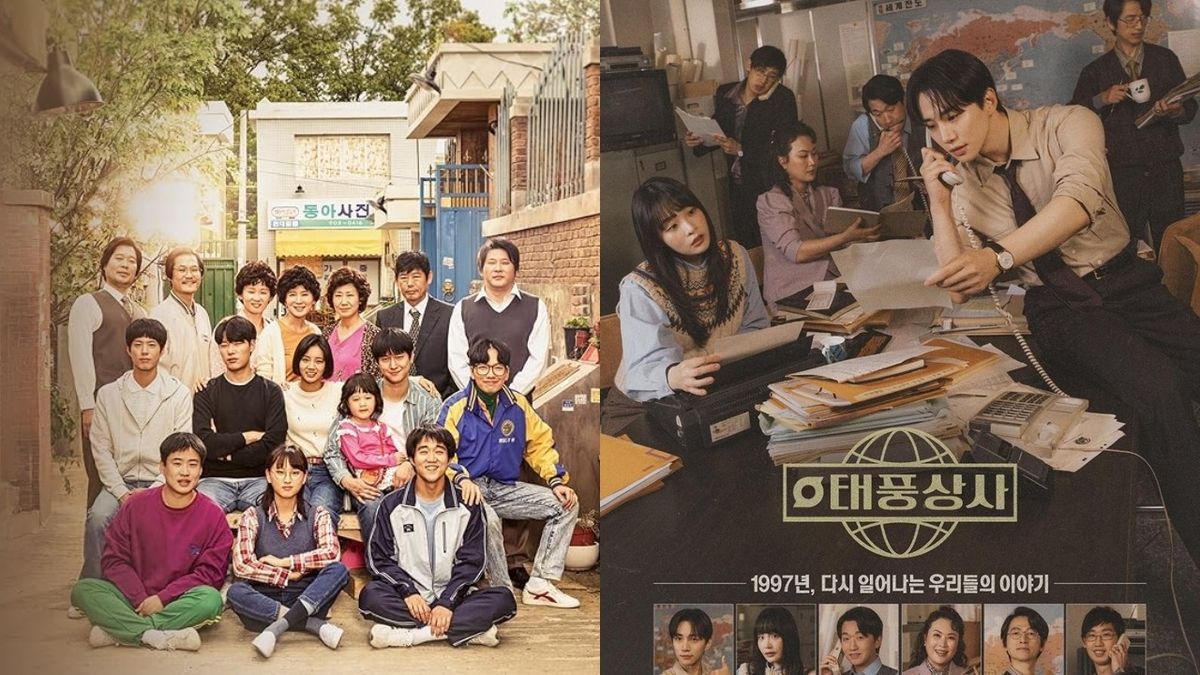
Typhoon Family and Reply 1988: A Tale of Two Dramas You Never Knew You Needed to Compare!
At first glance, one would think these two dramas belong on opposite sides of a cultural spectrum. We have the cuddly, warm blanket that is Reply 1988, snuggled under the comforting glow of late-’80s Seoul, and then there’s the nail-biting Typhoon Family, which dives headfirst into the raging waters of the 1997 IMF storm. But here’s the kicker: peel back those layers, and you’ll find that these shows are more alike than your average pair of mismatched socks. It turns out they both share a keen interest in family, responsibility, and—we dare say—community bonding that could rival a neighborhood bake sale.
Also Read: K-drama men have enough love to fill an ocean… and maybe that’s why men in real life wish they could sink them!
Now, Let’s Dive Deep Into Their Similarities!
Family: The Core Ingredient
Both Reply 1988 and Typhoon Family feature families that would make you green with envy, at least if you ignore the occasional yelling match over who left the fridge open. Reply 1988 dives into those delightful family dynamics that could make even a soap opera look mundane, spotlighting intergenerational relationships that make you question your own family’s sanity. Conversely, Typhoon Family spins a yarn about a family business where responsibilities are passed down like a family heirloom, presumably with fewer awkward holiday dinners.
Socio-Economic Drama or Just Regular Drama?
Reply 1988 drops us into a nostalgic 1988 Seoul, where you not only engage with family but are also inundated with the broader historical context—because who doesn’t want a side of socio-political commentary with their laughter? Typhoon Family, meanwhile, takes us through the financial chaos of the 1997 IMF crisis, making your last trip to the grocery store feel utterly insignificant. Both dramas ground their engaging personal tales in larger historical events, reminding us that even our sob stories have universal themes.
/filters:format(webp)/socialketchup/media/media_files/2025/11/25/typ-2025-11-25-13-23-26.jpg)
Family or Framily? Who’s Counting?
One could argue that blood is thicker than water until they watch Reply 1988, where community spoils all notions of family. With five families in one neighborhood acting like a collective support group, it’s as if they’ve all shared the same therapist. On the other hand, Typhoon Family makes room for a makeshift family within its staff, proving that employees can be just as irritating as family members—but with a lower chance of stealing your leftovers.
/filters:format(webp)/socialketchup/media/media_files/2025/11/25/typp-2025-11-25-13-35-59.jpg)
The Romance That Takes Forever
Ah, the infamous slow burn romance that’s likely to be compared to watching paint dry. Reply 1988 brings us gentle, understated love stories that unfold like a delicate origami crane, while Typhoon Family gives us a love story that’s a tad more urgent, featuring Kang Tae-Poong and Oh Mi-Seon. Perhaps they both recognized that romance should come with the pressure of economic collapse!
/filters:format(webp)/socialketchup/media/media_files/2025/11/25/typph-2025-11-25-13-40-28.jpg)
Cultural Insights through Mundane Life
Reply 1988 cleverly uses ordinary activities like family meals and neighborhood gatherings to weave in cultural reflections and generational changes. Meanwhile, Typhoon Family uses its business context to shine a spotlight on national issues, making office politics seem as riveting as reality TV drama.
/filters:format(webp)/socialketchup/media/media_files/2025/11/25/typpho-2025-11-25-13-42-26.jpg)
The Real MVP: Sung Dong-Il
Let’s give a standing ovation for Sung Dong-Il, the unsung hero tying these dramas together. Playing the diligent father who longs for a life better than his Wi-Fi connection, he brings to life characters we can’t help but root for, despite their occasional fondness for torturing their children with lessons on responsibility.
/filters:format(webp)/socialketchup/media/media_files/2025/11/25/typphoon-2025-11-25-13-43-38.jpg)
So, do you also see the profound similarities between these dramas or are you just here for the melodrama and emotional rollercoaster? Share your thoughts in the comments below!
For more entertaining debates, don’t forget to follow us on @socialketchupbinge.
