
La Vie en Crumb
Ah, Robert Crumb, or “R Crumb” if you’re feeling particularly formal. A titan of modern cartooning and a certified oddball, he’s the kind of guy who probably wouldn’t flinch at a dinner party if someone brought up the merits of 19th-century shellac records. Dan Nadel’s painstakingly detailed biography brings you every juicy detail of this iconic figure, almost as if it were a script for a bizarre biopic.
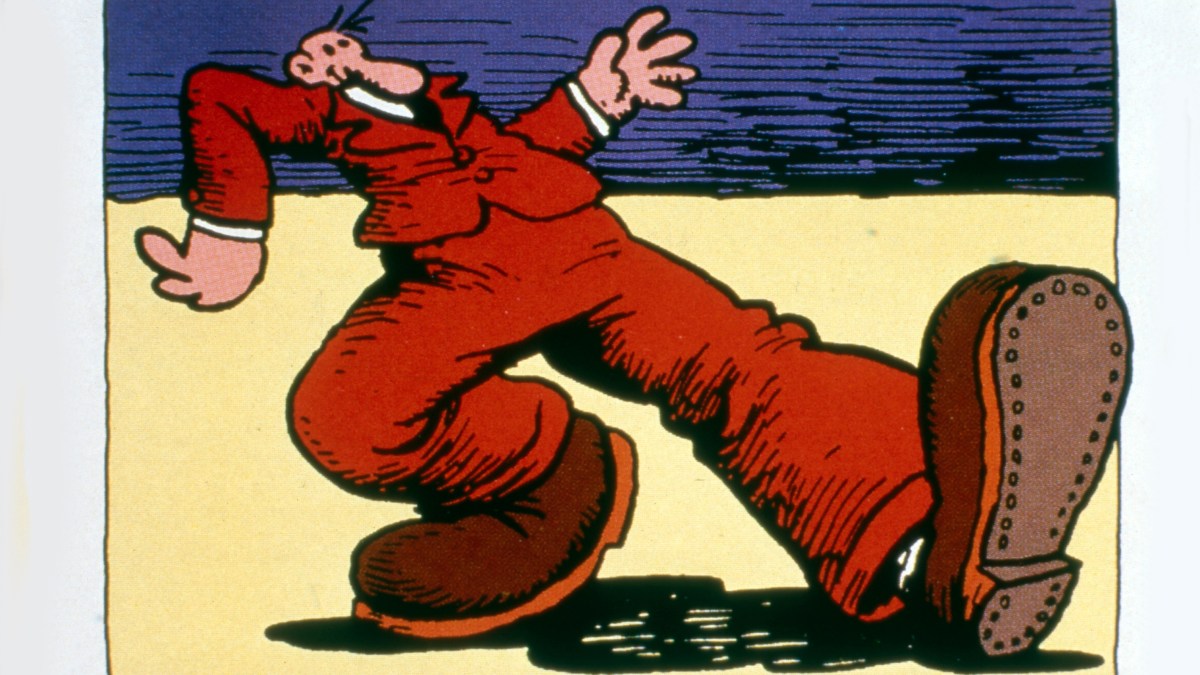
For ages, Crumb’s claim to fame in the mainstream was as the illustrator of the album cover for Big Brother and the Holding Company featuring Janis Joplin in *Cheap Thrills*. He’s also the genius behind those stoned, elongated figures that adorned every dorm-room poster and 18-wheeler mudflaps across America, famously encouraging everyone to “Keep on Truckin’.” But let’s not kid ourselves; this is just the frothy overspill of a caffeinated cup of underground comics, where he served as the head barista during the Sixties and Seventies, stirring the pot of Zap Comix.
Crumb showered us with a psychedelic pantheon of lustful, philosophically scabrous, and borderline absurdist characters. You’ve got Mr. Natural, the Snoid, Angelfood McSpade, and Fritz the Cat, among others. And, let’s be honest, his most complex character is none other than the lanky R Crumb himself—if a lanky ectomorph wearing milk-bottle specs isn’t a depiction of pure mental chaos, what is? His neuroses practically have their own Instagram account.
Let’s talk inspiration. Crumb learned his craft from Harvey Kurtzman of Mad magazine fame and Carl Barks, a.k.a. the “good duck artist” who, ironically, preferred to fly under the radar. And here’s the kicker: every major cartoonist owe Crumb a debt of gratitude. No Crumb? No Art Spiegelman, no Chris Ware, no Joe Sacco, no Daniel Clowes—just an empty void where underground comic brilliance should be. Spiegelman himself once mused, “Every cartoonist has to pass through Crumb,” which sounds more like a cosmic rite of passage than a statement about artistic influence.
But let’s not sugarcoat it; Crumb was the epitome of the #problematic artist. Angelfood McSpade is a hyper-sexualized caricature that would make a social media manager sweat bullets. With themes like rape played for laughs in his early comics, even the most stoic critics can’t ignore the murky racial and sexual politics of his work. His defense? A healthy dose of honesty—he doesn’t create stereotypes; he simply reflects them like a funhouse mirror at a carnival.
In his ongoing existential crisis, Crumb managed to indict himself by being disgustingly honest about his lusts, prejudices, and every other secret he’d rather keep under wraps. One memorable panel shows him getting an emotional earful from an angry woman, complete with all the trendy buzzwords of today. His speech bubble reads, “I’ll be good, I promise!” while his mind whispers, “@*!!! BITCHES.” Talk about a classic comic relief!
Crumb’s sexual escapades could fill a novel—or at least a spicy coffee table book. He experienced considerable success in that department, even while neglecting his first marriage and his son like a misplaced car key. Yet, he somehow enjoyed a long (but not exactly monogamous) partnership with Aline Kominsky, who clearly had the patience of a saint. By the mid-Seventies, the counterculture world revolving around him began to retreat, prompting him to explore a grittier, more realistic style. Of course, when punk rock sneered at his work, he melancholically “killed off” Mr. Natural. Because nothing conveys artistic resilience like a dramatic death scene!
In a twist of irony, just as he stepped back from the limelight, Crumb’s works skyrocketed in value. His relationship with money is perhaps best described as ‘monastic’—not the kind of monk that’s devout, but rather one that politely declines lucrative gigs while owing tax bills bigger than his ego. Picture him turning down $20,000 for Mr. Natural plushies and saying “No, thanks” to the Rolling Stones for an album cover because their music didn’t tickle his fancy. Truly, a capitalist’s nightmare.
Now, having aged like fine wine (or maybe moldy cheese), Crumb resides in rural France, working on his legacy while regularly shrugging at interview requests. If you’re curious about how someone could live with such contradictory virtues of artistic integrity and financial oblivion, Nadel has laid it all out in *Crumb: A Cartoonist’s Life*. You won’t just glean insights; you may even wonder how many more neuroses one person can have without spontaneously combusting.
