

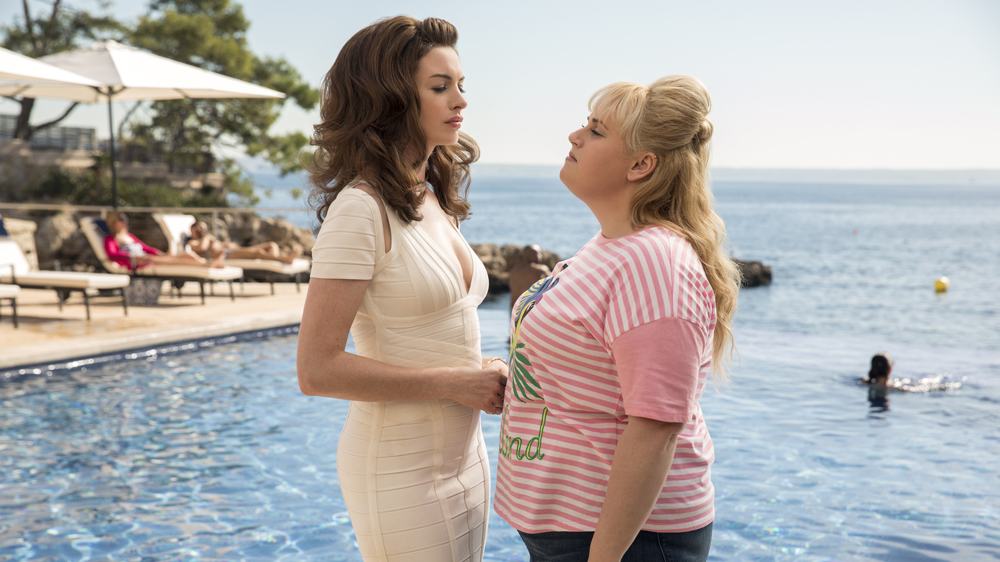
The Hustle: A Comedy of Chicanery on the Riviera
“The Hustle” is more than just a mere rivals-in-crime saga; it’s a feminista romp set against the glimmering backdrop of the French Riviera—think sun, sand, and scams. Anne Hathaway dazzles as the posh British grifter who slips the financial flab off any unsuspecting victim with the grace of a ballet dancer. Meanwhile, Rebel Wilson rolls in, all disheveled charm and crass humor, stealing their wallets and possibly their hearts. Move over, “Dirty Rotten Scoundrels,” there’s a new con in town, though considering it’s a remake within a remake, one has to wonder: is Hollywood out of ideas or just recycling gold?
The Star-studded Con Job
In this illustrious lineage of films, we’ve gone from Marlon Brando and David Niven in “Bedtime Story” to Steve Martin and Michael Caine in “Dirty Rotten Scoundrels,” and now, rounding out the trio, we have Wilson and Hathaway. It sounds like a recipe for cinematic perfection—wild meets debonair—but alas, the result is like overcooked pasta: palatable but seriously lacking in zest. If you break it down, the films tick all the right boxes of class tension, sight gags, and every underworld trick in the book. Yet the final product? More lukewarm than exhilarating. Maybe the genre is crime, but the tone is about as edgy as a butter knife.
Fizzy Fun, But No Pop
The opening scenes of “The Hustle” pulse with energy, leaving you longing for an explosion of laughter that unfortunately fizzles out. Hathaway can swing between impersonating various personas with the dexterity of a circus performer, and she certainly excels at playing a ruthless seductress. It’s like watching Julie Andrews channel her inner Bond villain, which is an image that opens the door to endless possibilities. Yet while she delivers each quip with ice-cold precision, Wilson is the chaotic whirlwind. Her Penny is less of a finely-tuned special agent and more like a runaway train scaring everyone on board.
The Highs and Lows of Conning
The plot kicks off with Penny determined to snag some unsuspecting male easy prey through a dating app. Spoiler alert: He’s disappointed because she doesn’t match the glamour of her profile photo. Ever the quick-thinker, she spins a tale about her sister needing cash for something absurdly extravagant—because who doesn’t put dollar signs on artificial enhancements? This leads us to a casino where Josephine, brilliantly portrayed by Hathaway, exudes “wealthy American bimbo” vibes while simultaneously conning a Eurotrash gambler out of his wife’s sparkling bracelet. It’s the rapid-fire manipulation that leaves your head spinning—and wishing for more con artistry.
To Team Up or Not to Team Up?
Josephine soon finds herself reluctantly partnering with Penny, akin to a seasoned chess player forced to team up with a puppy that just chewed the board. Initially, “The Hustle” is a gleeful escapade of women outsmarting greedy men, suggesting that female con artists might possess a certain edge—likely because no man is ever prepared for a woman outwitting him. Sure, it’s a delightful observation backed by the #MeToo movement, yet the script doesn’t take full advantage of its potential. Instead of diving deeper, it dips a toe in but quickly retreats, much like a cat staring at a bathtub with lingering distrust.
The Master Plan: An Underwhelming Climax
The duo’s ultimate target is a wealthy tech bro—because nothing screams “con” like swindling a man who created an app for dog adoption. Their grand scheme involves turning back the romantic clock to the “let’s pretend” era, where Penny pretends to be a love-struck damsel while Josephine dons the guise of a stern doctor. If only the punchlines could keep up! Despite what begins as a sharp satirical take on love and money, it devolves into a somewhat bland resolution where the witty observations get lost in a haze of eye rolls.
The Flaw in the Grand Scheme
In the movie’s final act, it aims for an epic showdown of feminine trickery but instead lands somewhere between a lukewarm hug and a wishy-washy compliment. One can’t help but feel a sense of betrayal as the film loses its initial edge and turns into a pleasant, albeit forgettable, dessert. “The Hustle” starts as a crispy tale of con artists but ends up tasting like cotton candy—sweet but invisible. As the critics grumble, the real comedic value lies in recognizing the absurdity of it all—in a world where you backdrop your life with con-artistry and no one seems to blink an eye.
