
Robert Crumb: The Oddball Genius of Modern Cartooning
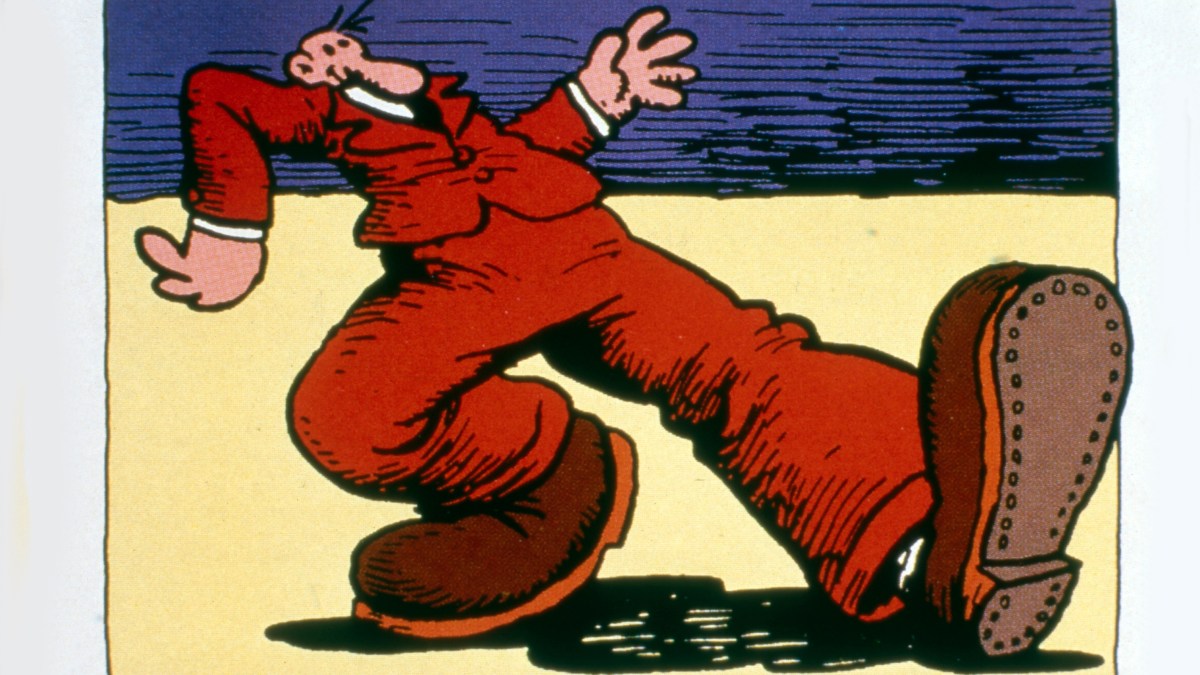
Robert Crumb, or “R Crumb” as his signature declares, is not just another cartoonist; he’s a towering pillar of modern cartooning who operates on a frequency all his own. Dan Nadel’s intricately detailed biography offers a wealth of information about this idiosyncratic artist, leaving readers wonderstruck and slightly bewildered.
For quite some time, Crumb was the go-to guy in the “straight world,” beloved for his cover of Big Brother and the Holding Company’s album Cheap Thrills, along with the stoned figures and the slogan “Keep on Truckin’” that adorned everything from dorm-room posters to 18-wheeler mudflaps. But let’s be honest, that was just the icing on the cake. Crumb was, in fact, the godfather of underground comics in the Sixties and Seventies, and the mastermind behind Zap Comix—because why have just one creative outlet when you can juggle a dozen?
Crumb introduced us to a psychedelic pantheon of characters—each more outrageous than the last. Among these were the likes of Mr. Natural and Fritz the Cat, who offered more than just laughs; they provided a lens through which to view our collective neuroses, embodied by Crumb himself. That lanky, milk-bottle-spec-wearing soul seethes with resentments that might put a soap opera to shame.
Crumb honed his craft under the giant shadows of Harvey Kurtzman, the anarchist genius of Mad magazine, and Carl Barks, who drew Disney’s Donald Duck strips with a flair that left young Crumb in awe. Now, here’s a twist: every contemporary cartoonist owes a debt to Crumb. Nadel makes the case that without Crumb, we’d be devoid of Art Spiegelman, Chris Ware, Joe Sacco, and Daniel Clowes—truly a dark world indeed. Art Spiegelman once said, “Every cartoonist has to pass through Crumb. It’s like the evolutionary leap in 2001: A Space Odyssey—all cartoonists must go through him to discover their unique voice.” Talk about a rite of passage!
While Crumb became a symbol of the Sixties counterculture, let’s pump the brakes a little. He was less a revolutionary and more of a nostalgic archivist, collecting 78rpm records like an eccentric dragon hoarding golden artifacts. His gaze often turned back to the 19th and early 20th centuries, making his voice a curious blend of the old and the seemingly absurd. His politics leaned heavily against corporate America, yet his deeper explorations were profoundly personal, revealing the messy threads of his own psyche.
Born into a dysfunctional Philadelphia family in 1943—complete with operatic unhappiness and a legacy of addiction and madness—Crumb took the notion of “dysfunctional childhood” to new artistic heights. His beloved older brother, who once joined him in drawing comics, succumbed to mental health issues and drug addiction, leaving Robert negotiating his own demons. One could argue that the real miracle is how he managed to escape into a world of creativity instead of chaos.
But let’s not sugarcoat it: Crumb has often been described as #problematic. Characters like Angelfood McSpade offer a hyper-eroticized view of race that raises eyebrows; his early comics touch on themes such as rape, which were often delivered with a side-order of dark humor. The defense from both him and Nadel? “We’re not creating stereotypes; we’re merely reflecting them.” Classic case of the artist as the mirror—just one with a few cracks.
In the convoluted tapestry of his life, Crumb’s sexual exploits often ran rampant—his first marriage, the result of youthful lust, fizzled out spectacularly. But fear not, he found solace in a long-term partnership with Aline Kominsky, complete with all the delightful chaos one could expect from a duo so intricately linked. As the glorious punk rock era surged, Crumb wrestled with a world that had seemingly moved on from him, but he remained unrepentant, illustrating a grittier, more realistic style in Harvey Pekar’s American Splendor. Smirk all you want; this was noise even the most reticent avant-garde would appreciate.
And now, after years of navigating the tumultuous world of publishing, Crumb’s work has become monetarily valuable—just as he stopped producing much of it. But remember, cash was never the goal for him; his relationship with money is, at best, childlike. He turned down gigs worth thousands, opting instead for an eccentric lifestyle in rural France, demonstrating the kind of monk-like integrity one seldom sees in cartoonists. When Nadel casually approached him for this biography, Crumb merely shrugged, as if to say, “Sure, why not?” Because, let’s be honest, an interaction like that is just another panel from Crumb’s own comic strip that is life.
Crumb: A Cartoonist’s Life by Dan Nadel (Scribner £25 pp458). For a delightful journey through absurdity, grab a copy from the timesbookshop.co.uk—free UK standard P&P available on orders over £25, just in case you need a reason to get lost in Crumb’s world.
