
Robert Crumb, or “R Crumb,” the man who made cartooning an Olympic sport in absurdity, has recently stumbled into the spotlight thanks to Dan Nadel’s biography. A tome bursting with enough details to make a tax accountant weep, it chronicles both Crumb’s peculiar life and his esteemed place in the modern cartooning pantheon—if such a thing even exists.
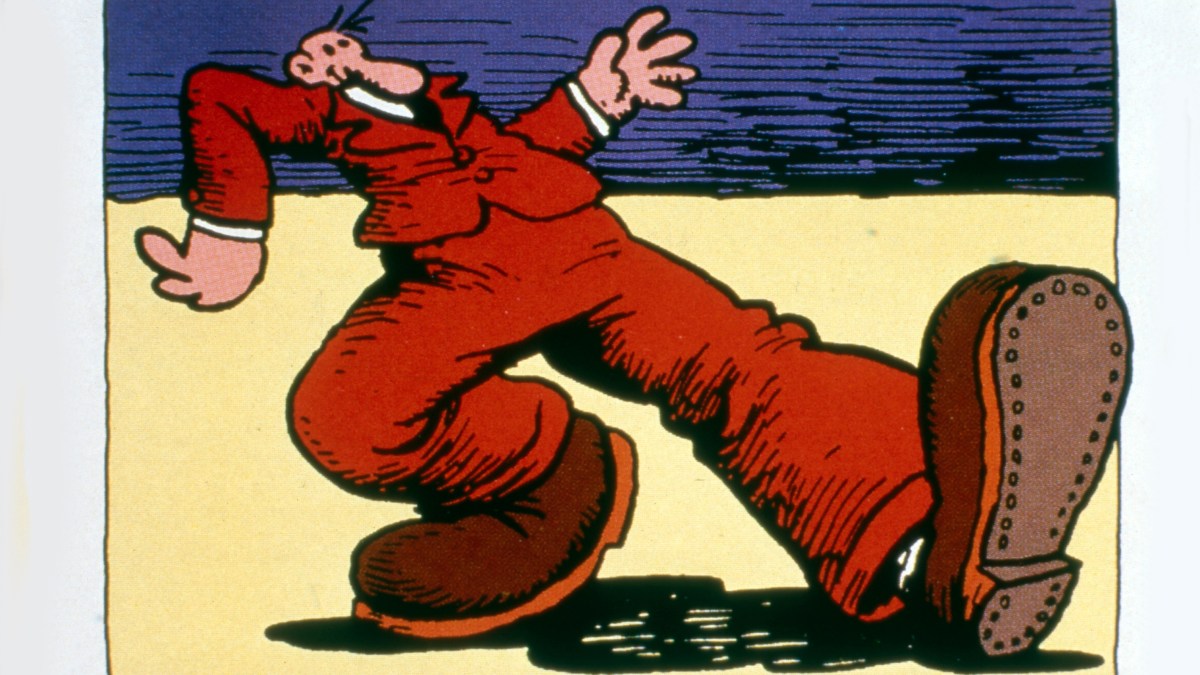
Once upon a time, Crumb was a household name—if your household was the 1960s counterculture, that is. He was (in)famous for illustrating the cover of Big Brother and the Holding Company’s *Cheap Thrills*, possibly the only album cover that could make a dorm room look like a psychedelic art installation. You might also recognize his iconic “Keep on Truckin’” figures, which graced everything from mudflaps on eighteen-wheelers to posters that somehow seemed mandatory in every college residence. But let’s not kid ourselves; this was just the appetizer. Crumb was the grand wizard of underground comics during the Sixties and Seventies, wielding his pen like a scepter in the wild realm of Zap Comix.
His works introduced us to a trippy ensemble of hilariously grotesque and often morally questionable characters. These include Mr. Natural, who looked like he just rolled out of a yoga class full of existential crises, and Fritz the Cat, a character who is best described as a feline version of a 1970s college philosophy major. Yes, Crumb gave us a delightful chaos of lustful and ethically murky figures, expertly crafted with his instantly recognizable hatching style—if you can call a nervous tic that. Enter his most troubling yet relatable creation: R Crumb himself, embodying the walking anxiety that most of us recognize in the mirror each morning.
Inspired by the erratic genius Harvey Kurtzman of *Mad* fame and the blissfully anonymous Donald Duck artist Carl Barks (who apparently was THE “good duck artist”), Crumb managed to carve his own space in the cartoon universe. According to Nadel, if it weren’t for Crumb, we might never have met the likes of Art Spiegelman or Daniel Clowes. Spiegelman himself once quipped that every cartoonist must “pass through Crumb” like some sort of rite of passage, which makes one wonder what kind of cartoonist bathroom line that might entail.
While you might think Crumb was merely a flag-waving icon of the Sixties, his interests skewed towards the archaic. His nostalgic obsession with old 78rpm records reveals a longing for a time that likely never existed—much like the golden age of cartoons he idolized. Though his politics can be described as “anticorporate,” his self-reflective tendencies mean he often filters societal examinations through his own kaleidoscope of neuroses. Talk about self-centered! Crumb’s dive into the tumultuous waters of his own psyche has given us as much cringe as it has contemplation.
Born in 1943 in a Philadelphia family that could double as a soap opera script, Crumb’s early life was touched by anger, addiction, and some unresolved family therapy issues. His older brother, once his artistic partner-in-crime, didn’t escape the maelstrom and tragically took his own life. Given this backdrop, Crumb’s successful escape into the world of cartooning is practically a Hollywood plot twist, albeit one with a decidedly darker underbelly. It seems that a turbulent childhood can either break you or make you a prolific caricaturist—but I guess that’s just one of Life’s many jokes.
Now, let’s address the elephant in the cartoon. Crumb’s work does wander into #problematic territory like it’s exploring a minefield blindfolded. Characters like Angelfood McSpade raise more than a few eyebrows, and his early comics’ depiction of sensitive topics could make even the most open-minded individual squirm. Crumb himself argues that he merely reflects societal issues rather than creating them, which is his way of saying, “Hey, don’t blame me; I’m just the messenger.” Who knew self-justification could be so amusing?
Rather than facing much-needed introspection or even jail time, Crumb found himself with a winning hand in the game of romantic exploits, although his first marriage did go up in flames—not in a glamorous way, of course. Following a flirtation with fatherhood and a disintegrating marriage, he embarked on a long, rambling relationship with Aline Kominsky, where “mostly happy” must qualify for a sitcom title. But just as he thought he was riding the wave, the tide turned, and Crumb had to grapple with the harsh realities of artistic relevance in a society moving on without him. With punk on the scene and critics calling him a “tired-out over-drawn cartoon has-been,” he gave Mr. Natural a very final goodbye and entered a phase of existential crisis that only artists can truly experience.
Fast forward to now. Crumb’s work is suddenly selling for sums so inflated that you might suspect inflation will take up a side gig as an art dealer. Yet, true to his monk-like principles (if you can believe that amidst bizarre caricatures of lust), he often rejected the money like it was another dreary corporate job offer. However, he did give a hearty thumbs-up to the seven-dollar coffee shop across the street. Fabulously out of touch, the genius lives in rural France, having perfected the art of being both an icon and an enigma. Nadel managed to convince him to sit down for a chat, but after four months of travel, the famed cartoonist merely shrugged and said, “I’m not opposed to it.” Classic Crumb.
In short, *Crumb: A Cartoonist’s Life* by Dan Nadel combines an in-depth look into a man whose life is both a cautionary tale and a source of endless fascination. Go on and grab your copy—just don’t forget to check the price tag before deciding if you’re willing to make that leap into Crumb’s chaotic world.
