

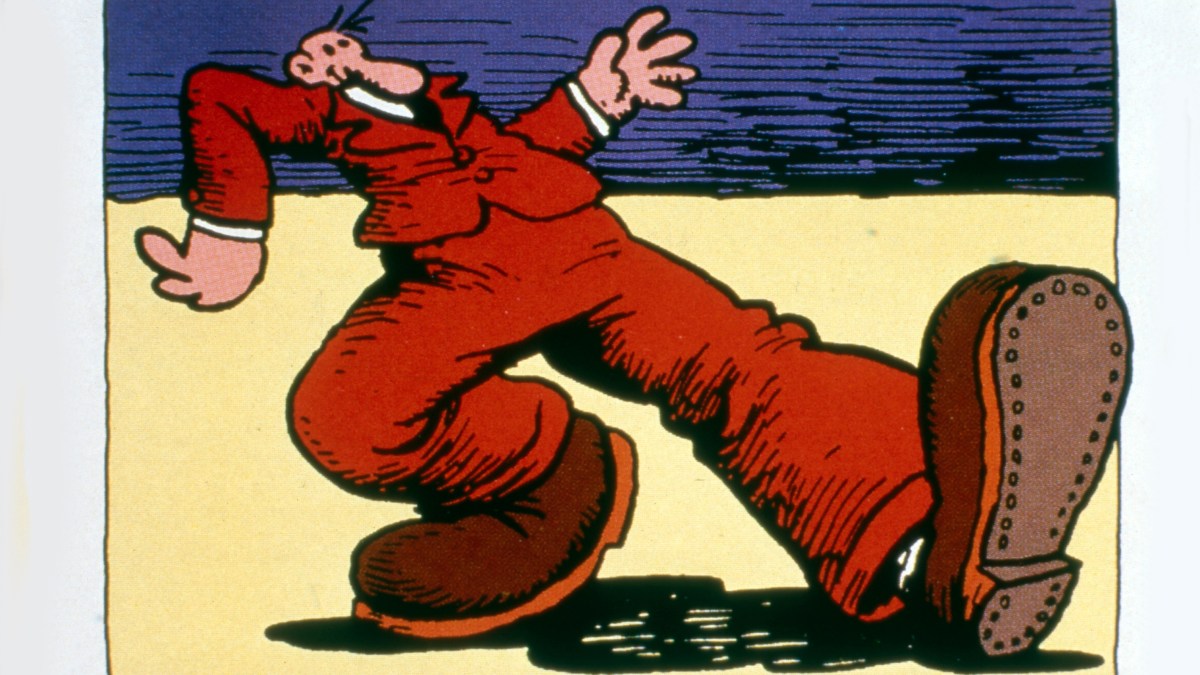
Ah, Robert Crumb—also known as “R Crumb” because regular names are just too mainstream for a modern cartooning legend. Dan Nadel’s meticulously detailed biography offers a deep dive into the man and myth who resembles, in many ways, a wonderfully bizarre character from his own comics.
For the uninitiated, Crumb is probably best recognized for that iconic illustration on the cover of the Cheap Thrills album by Big Brother and the Holding Company with the ever-memorable Janis Joplin. You know, the one that made dorm-room walls just a tad more expressive? And let’s not forget those drunk, elongated figures proclaiming “Keep on Truckin’,” which adorned mudflaps like some kind of countercultural Les Misérables. But hold your applause—he was also the mastermind behind underground comics in the Sixties and Seventies, serving as both the guiding light and cover artist of Zap Comix. An overachiever, really.
From the mind of Crumb came a psychedelic pantheon of characters—absurd, lust-driven, and philosophically scabrous, which might sound like a bad Tinder date gone wrong. Think Mr. Natural, Fritz the Cat, and the complex web of neuroses that is R Crumb himself—replete with milk-bottle glasses and an unsettling amount of self-loathing.
Crumb learned the ropes from legends like Harvey Kurtzman, the anarchist spirit behind Mad Magazine, and Carl Barks, who created delightful Donald Duck strips. Yet, Crumb’s impact is such that he has become the don of a new generation—without him, we might never have seen the likes of Art Spiegelman, Chris Ware, or David Clowes. As Spiegelman famously quipped, “Every cartoonist has to pass through Crumb.” Which sounds like some sort of rite of passage but, thankfully, involves less blood and more ink.
Though an icon of the Sixties counterculture, Crumb is far more self-referential than rebellious. This is a man who collects 78rpm records like they’re Pokémon cards. His work looks back to the Victorian era and early 20th century rather than lounging around with tie-dyed shirts and peace signs. His politics might lean anticorporate, but before critiquing the system, he puts himself under the same microscope. Because, you see, self-loathing can spark creativity, or at least, a few good punchlines.
Born in 1943 into a family with so much emotional baggage it could fill a Victorian novel, Crumb had a childhood rife with chaos. His beloved older brother, with whom he first drew comics, had a tragic end, which almost makes one wonder if Crumb’s neuroses are the universe trying to squeeze out some art from familial madness. But let’s not psychoanalyze too deeply; this is humor after all—at least the humorous kind that makes you cringe while you chuckle.
Certainly, Crumb’s work isn’t without controversy. His characters include some incredibly outlandish caricatures that skate the line on cultural sensitivity (to put it lightly). Rape and racial stereotypes were, at one time, staples of his humor. The defense is that he merely held a mirror to society—though it’s a funhouse mirror at best, and let’s just say that you might not want to hold your reflection in this one too closely.
Crumb’s sexual escapades could fill several more volumes. While some men face social judgment for catcalling, Crumb seemed to charm women into accepting some rather ludicrous behavior. His first marriage ended like a poorly-written sitcom, and from there, it was off to a series of romantic entanglements—because who needs boundaries when you have a pen and a penchant for the absurd?
Ironically, despite his early rewrites of the rulebook on comics, Crumb later found himself wrestling with the shifting tides of cultural relevance. Punk rock came in and had a bit of a laugh at his expense, leading him to send Mr. Natural off to an untimely demise. But hey, every washed-up artist deserves a second act—much like Crumb is currently experiencing as his work is suddenly worth more than it ever was, right about the time he realized he was done producing it. Go figure.
And thus lives Crumb today—a widowed octogenarian residing in quaint rural France, a tiny neotony of genius staring out at the world, seemingly unfazed by a lifetime of turmoil. Dan Nadel’s biography might be a comic book nerd’s dream, but it offers the profound complexities of a man who was never afraid to question his own sanity while sketching the absurdities of society.
