

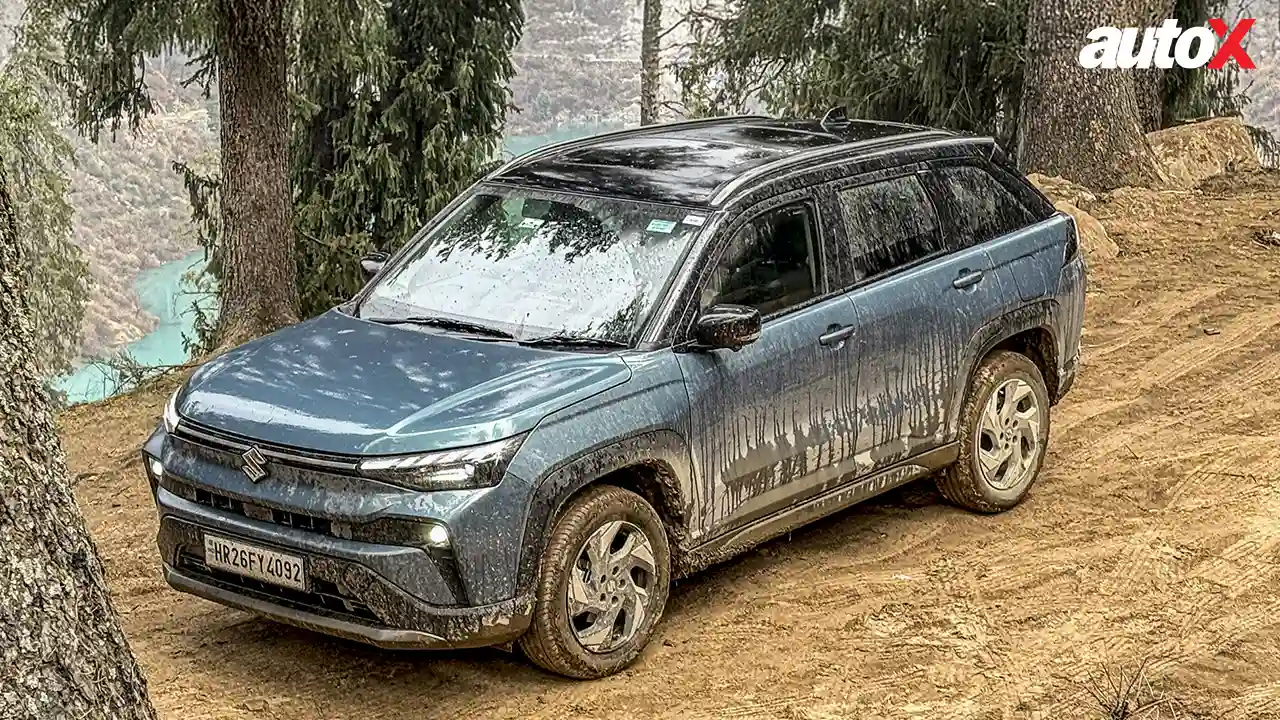
A long highway haul, steep mountain roads, and city traffic — our 1,200km Himachal trip was the perfect test of the Victoris strong hybrid’s efficiency.
Introduction: The Journey Begins
As the year comes to a close, I embarked on a trip to the scenic hills of Himachal Pradesh driving our long-term Victoris, specifically the strong hybrid version. For many considering this variant, the main focus is undoubtedly fuel efficiency. With a robust 1,200km of diverse driving conditions ahead — including city roads, expressways, and steep mountain paths — my goal was to uncover the true fuel efficiency of the Victoris hybrid.
Day 1: Delhi to Chandigarh
Day 1 marked the beginning of my journey with a drive from Delhi to Chandigarh, approximately 300 kilometers away. Thanks to the newly inaugurated Delhi-Katra Expressway and the Trans-Haryana Expressway, I was able to cruise comfortably at speeds of 100-120km/h. Notably, while the Victoris demonstrated remarkable efficiency in the city, returning a stellar 21 km/l, this figure dipped slightly to 17.5 km/l by the time I reached Chandigarh.
From Chandigarh to Kalga
The following day, I ventured towards Kalga, a charming village nestled high in the Himachal mountains. However, just before leaving Chandigarh, the Victoris alerted me it was running low on fuel, prompting a fill-up of 36 litres. With a reset of the trip meter, I initiated a fuel economy test from reserve to reserve to capture the hybrid’s performance.
Climbing the Mountain Roads
As expected, fuel efficiency experienced a notable decline while climbing the rugged terrain, dropping to around 13 km/l. This wasn’t entirely shocking; demanding consistent power from a hybrid system typically results in lower efficiency. Nonetheless, the return leg proved to be a different story as the Victoris rebounded impressively, offering an average of 22km/l— a remarkable feat given the challenging conditions.
Overall Fuel Economy Results
By the time the vehicle hit reserve again, I had accumulated 632 kilometers on the odometer, averaging about 17-17.5km/l over mixed driving conditions. These numbers underscore the Victoris strong hybrid’s effectiveness in navigating various terrains while maintaining a competitive fuel economy.
Comfort and Drawbacks
Beyond fuel efficiency, the Victoris presented itself as a comfortable ride throughout this extensive journey. However, a few drawbacks became evident. The braking system, especially in conjunction with regenerative braking, felt somewhat abrupt and did not inspire confidence. Additionally, the Infinity sound system lacked the auditory brilliance I had hoped for, and the strong hybrid variant unfortunately misses out on advanced driver-assistance systems (ADAS), particularly adaptive cruise control which I greatly missed on the expansive expressways.
Conclusion: A Solid Choice for Efficiency Seekers
In conclusion, the Victoris strong hybrid proved to be a reliable companion on my Himachal expedition, showcasing commendable fuel efficiency and comfort throughout varied driving conditions. While it has its quirks, including some minor drawbacks, it remains a solid choice for anyone prioritizing efficiency in their driving experience.
