
Meet Robert Crumb: The Eccentric King of Cartooning
Ah, Robert Crumb, or as he’s affectionately known—“R Crumb.” This man is a titan among cartoonists and a certified oddball. Dan Nadel’s biography is packed with enough details to fill a comic book, revealing both the genius and the quirks of Crumb’s life.
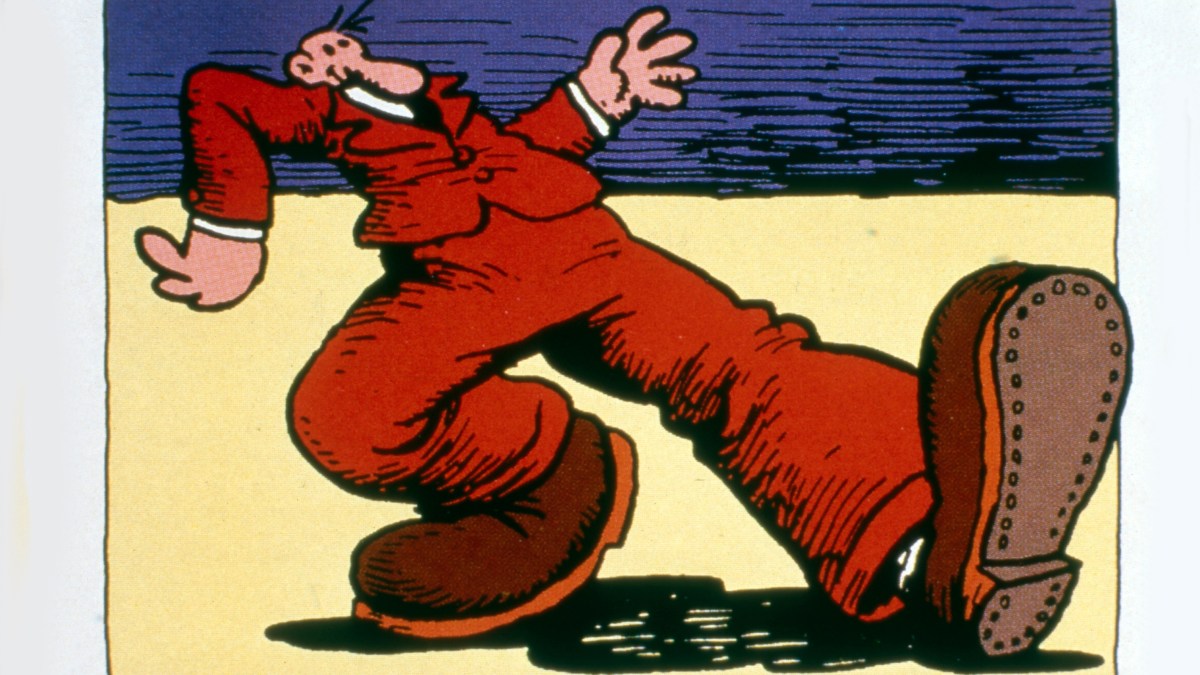
Once upon a time, the outside world recognized Crumb mainly for his iconic artwork for the Big Brother and the Holding Company/Janis Joplin album Cheap Thrills, and those groovy “Keep on Truckin’” figures that adorned countless dorm rooms and 18-wheeler mudflaps. But let’s be honest; that’s like calling Picasso the guy who painted that one well-known face. Crumb was the beacon of underground comics in the Sixties and Seventies, leading the charge with Zap Comix, leaving the rest of us mere mortals in the dust.
Crumb gifted us an LSD-fueled pantheon of absurdist characters, featuring the likes of Mr. Natural, Fritz the Cat, and his most introspective creation, R Crumb himself—skinny, bespectacled, and simmering with a delightful cocktail of resentments. It’s a wonder he didn’t just transform into a walking therapy session.
He learned his craft from some legends—Harvey Kurtzman, the Mad magazine anarchist, and Carl Barks, the “good duck artist.” But here’s the kicker: as Nadel suggests, without Crumb, the world would be a considerably less interesting place for cartoonists like Art Spiegelman and Daniel Clowes. Spiegelman wittily remarked that every cartoonist must pass through the “Crumb stage”—much like an awkward teenage phase but with more hatching lines.
Now, let’s not kid ourselves: while Crumb epitomized the counterculture of the Sixties, his passions skewed decidedly vintage. He’s a collector of 78rpm records and often looks more like a time traveler from the early 20th century than a flower child. His political stance is broadly anticorporate, yet his self-examination is so relentless that it often overshadows any societal critiques.
Born in 1943 in a Philadelphia family where “happy” was clearly a foreign concept, Crumb’s early life featured all the lovely family dysfunctions: anger, madness, addiction, and even a dash of incest. Who needs reality TV drama when you’ve got that backstory? Tragically, Crumb’s beloved older brother, who collaborated on those first comics, succumbed to mental illness and drug abuse, a heartbreaking end to a promising artistic trajectory.
Crumb, alas, is what today’s youth would label #problematic. His characters sometimes tiptoe over the line of decency, and let’s just say that some comedic portrayals of sexual and racial themes leave much to be desired. But his defense? He claims he’s merely reflecting the culture rather than nurturing it. It’s the classic blame-the-mirror route! One can only wonder if he ever thought of launching a clothing line called “Truth in Advertising.”
Despite a string of relationship mishaps, including a rocky first marriage and a son he largely neglected, Crumb eventually found solace in a partnership with Aline Kominsky—a dynamic duo if there ever was one. Alas, as the cultural tides shifted away from the Sixties, so too did Crumb’s artistic momentum. He even poked fun at his own irrelevance after being ridiculed by a punk fanzine. The irony is thick enough to slice bread!
Fast forward to today, and Crumb’s artwork is suddenly valuable. But the man is basically a money monk, refusing loads of cash for projects like Mr. Natural plush toys and album covers for bands he didn’t like. We all know someone who’s too stingy to splurge on a decent cup of coffee, but Crumb takes it to a whole new level.
Now, living out his golden years in rural France, Robert Crumb is a man of contradictions: a genius cartoonist with a peculiar wit and a sensibility that might not transition well to modern sensibilities. When Nadel approached him for this comprehensive biography, Crumb shrugged it off, as if suggesting that discussing one’s life is just as unnecessary as a Netflix subscription in the middle of a power outage.
