
Robert Crumb: The Eccentric Genius of Cartooning
Ah, Robert Crumb, or “R Crumb” as his signature would have you believe—one of the towering figures in modern cartooning and undoubtedly one of the most peculiar individuals you might ever come across. Dan Nadel’s meticulously researched biography spills the beans on both his artistic prowess and his strangeness in a way that would make even the most bizarre of his creations nod in approval.
From Icon to Oddball
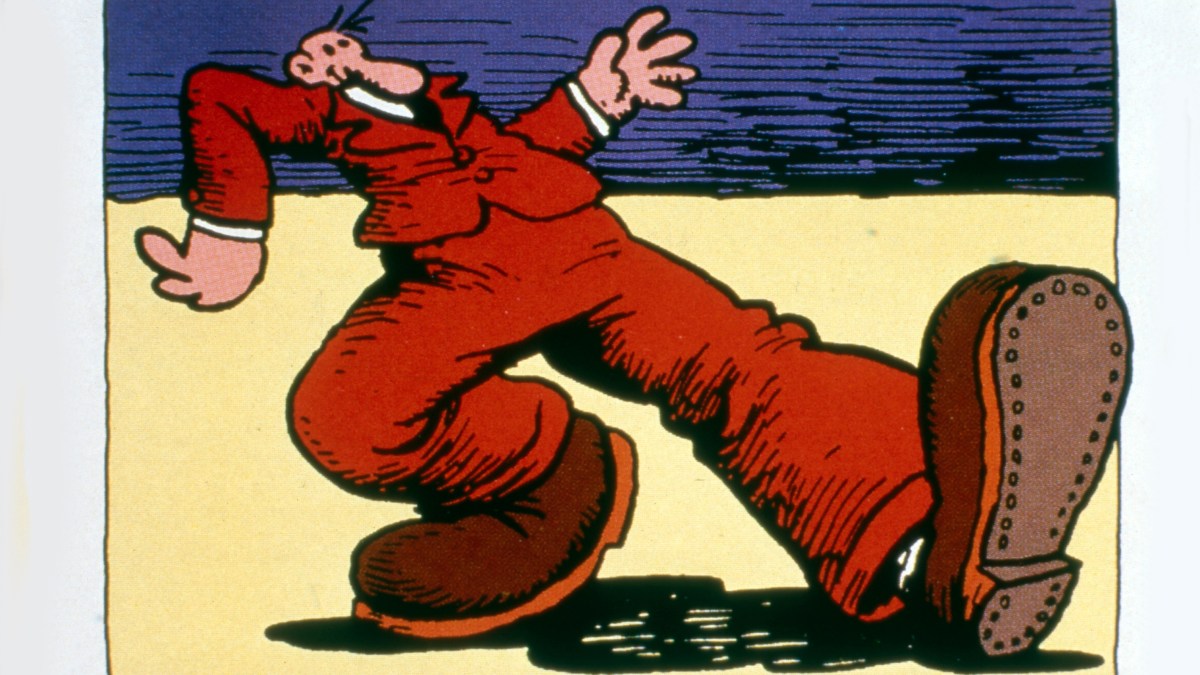
For years, Crumb was famous in the mundane world for his quintessential cover artwork for the Big Brother and the Holding Company/Janis Joplin’s album *Cheap Thrills* and the iconic “Keep on Truckin’” figures that graced everything from dorm-room walls to truck mudflaps. But let’s be honest, that was just the tip of the iceberg. He was the veritable lighthouse guiding the underground comics movement in the ’60s and ’70s, serving as both creator and cover artist for *Zap Comix*. Not exactly your average artist, eh?
A Hall of Absurdity
Crumb bestowed upon us an LSD-laden pantheon of absurdist characters. Think Mr. Natural, the Snoid, and Angelfood McSpade. Each character is given life through his unmistakable hatching. Among them is Crumb’s most profound and perplexing creation: himself—a lanky, anxiety-riddled ectomorph sporting milk-bottle specs and brimming with existential dilemmas. Because why wouldn’t a cartoonist reflect the chaos inside him?
Training with Titans
Crumb learned his craft from the likes of Harvey Kurtzman—an anarchic genius who graced *Mad Magazine*—and Carl Barks, affectionately referred to as “the good duck artist.” In a cosmic twist, many of today’s renowned cartoonists owe their existence to Crumb. Without him, there would be no Art Spiegelman or Chris Ware. In Spiegelman’s words, “Every cartoonist has to pass through Crumb,” like some rite of passage where you learn what your voice sounds like—hopefully without tripping over your own feet.
The Paradox of Counterculture
Certainly, Crumb was a figure of the ’60s counterculture, but let’s not pigeonhole him. His passions reveal a man steeped in nostalgia—specifically, an obsession with old 78 RPM records. The irony isn’t lost: while his politics are distinctly anti-corporate, his sharpest commentary often steers back to self-reflection. Just when you thought his world was black and white, he presents a shade of gray; a nuanced caricature of a complex individual.
Family Background: A Real Page-Turner
Born in 1943 into a lower-middle-class Philadelphia family, Crumb’s upbringing was best described as one’s worst nightmare wrapped in a tragedy. His family history reads like a soap opera filled with dysfunction—anger, addiction, and a sprinkle of incest. His older brother, with whom Robert first dabbled in comics, never escaped the storm and ultimately succumbed to tragic circumstances. One can only marvel at how Crumb managed to escape, even if just to gravitate towards the equally deranged world of cartooning.
The Question of Ethics
Let’s not sugarcoat—it’s impossible to discuss Crumb without acknowledging the *#problematic* nature of some of his work. Characters like Angelfood McSpade are hyper-sexualized racial stereotypes, and the early days of his comics often tackle contentious topics with cringeworthy humor. As he and his biographer argue, Crumb simply reflects a world that is anything but gentle. If anything, he holds a mirror to the chaos of his society, complete with all its glaring flaws—because who doesn’t love a little self-sabotage in their work?
