

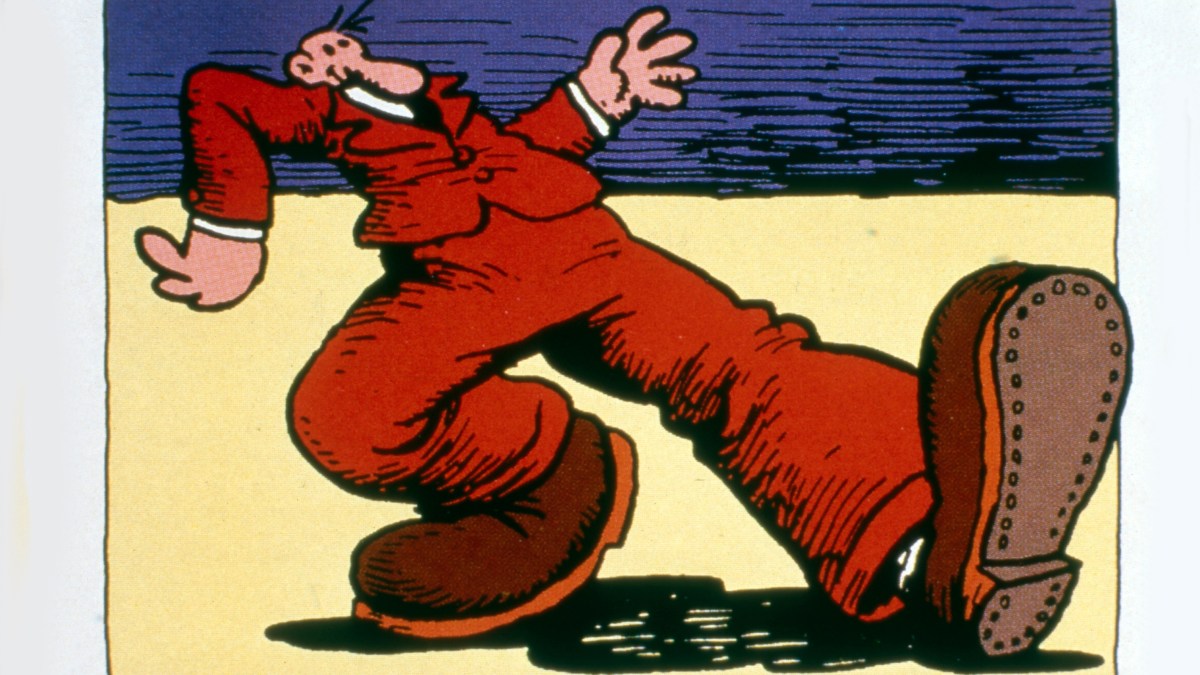
Meet Robert Crumb: The Eccentric Cartooning Legend
Robert Crumb, known to his fans as “R. Crumb”, is not just a cartoonist; he’s a towering figure of modern art who redefines “odd.” Dan Nadel’s meticulously detailed biography is the perfect antidote for anyone who thinks Crumb is merely famous for doodling stoned figures and captioning them “Keep on Truckin’” — because, spoiler alert, there’s more to him than college dorm murals and trucker mudflaps!
While Crumb made a name for himself in mainstream circles with his eye-catching cover for Janis Joplin’s *Cheap Thrills*, he was, in fact, the shining beacon of underground comics during the ’60s and ’70s. And if you didn’t know he was the mastermind behind *Zap Comix*, it’s time you got with the program, or at least the comic book store.
Crumb’s cartooning universe is a bizarre blend of LSD-inspired characters, like Mr. Natural and Fritz the Cat, that seem to waddle straight out of a fever dream. This cornucopia of quirky figures is brought to life with his distinctive hatching style, creating a pantheon of absurdity that might boggle your mind yet resonates with budding cartoonists. But let’s be honest: if someone says they don’t feel a twinge of empathy for R. Crumb, that lanky ectomorph in milk-bottle specs brimming with neuroses, they might just be a little too normal for this world.
Growing up in a family whose drama could rival a Shakespearean tragedy, Crumb was surrounded by dysfunction from the get-go. Born in 1943 to a lower-middle-class family in Philadelphia, he witnessed enough anger, addiction, and madness to fuel a dozen comic book series. His beloved older brother, who was also his co-drafter in their early endeavors, tragically succumbed to his battles with mental health, leaving Crumb as somewhat of a miraculous survivor. If neuroses were currency, Crumb would be a billionaire by now.
But let’s address the elephant in the room: Crumb’s work is, to put it lightly, #problematic. From hyper-sexualized caricatures like Angelfood McSpade to his historically dubious portrayals in early comics, let’s just say Crumb’s humor could use some serious context. Is he outrageously controversial? Perhaps. Did he create these stereotypes? Nope! He insists he merely reflects the cultural melange. If that sounds like a classic get-out-of-jail-free card, you may not be alone in feeling skeptical.
While his early works flirted with provocative humor, Crumb found himself at the center of societal shifts that left his sexually charged style looking a little—shall we say—outdated. Instead of getting #metooed, he enjoyed a rather successful romantic life, though he had his own share of relationship woes. Despite a rocky marriage and a fraught fatherhood, he cultivated a somewhat happy partnership with Aline Kominsky, an artist whose irreverence matches his own — like peanut butter and jelly, if jelly were made from existential dread.
As the cultural tides shifted and the ’60s counterculture he’d once helped to define started to ebb, Crumb indulged in a more realistic mode of storytelling. He dabbled in downbeat realism, as found in his collaboration on *American Splendor*, only to be met with scathing critiques from folks in the punk scene. Did it phase him? Judging by his melodramatic rebuttal — including the “death” of Mr. Natural — clearly, responses like “nobody likes me anymore” became his dramatic flair.
Crumb’s work has exploded in value, but let’s be real: he’s always seemed a tad blind to the green stuff. Known for shooting down lucrative offers like a seasoned auctioneer, he turned his back on thousands of dollars simply because, well, they didn’t align with his artistic vision. Turning down big projects like an album cover for the Rolling Stones? Classic Crumb. It’s almost as if he operates on the principle that money is merely a side effect of creating art, not the goal itself.
Now, as a widower in his ninth decade, Crumb resides in the countryside of France. When Nadel showed up to pitch his biography, Crumb merely shrugged, as if to say, “Sure, why not. I could use a little self-reflective analysis in my life.” It took months of planning just for that shrug! But isn’t that the Crumb experience — a quirky genius whose life is as colorful and chaotic as his comics?
