
Meet Robert Crumb: Comic’s Eccentric Luminary
Robert Crumb—or “R Crumb” if you want to feel hip while talking about him—is not merely one of the giants of modern cartooning; he’s also an oddball whose biography reads like a mashup of an underground comic and an overcooked soap opera. In Dan Nadel’s meticulously detailed biography, you can dive deep into the strange, mesmerizing world of Crumb.
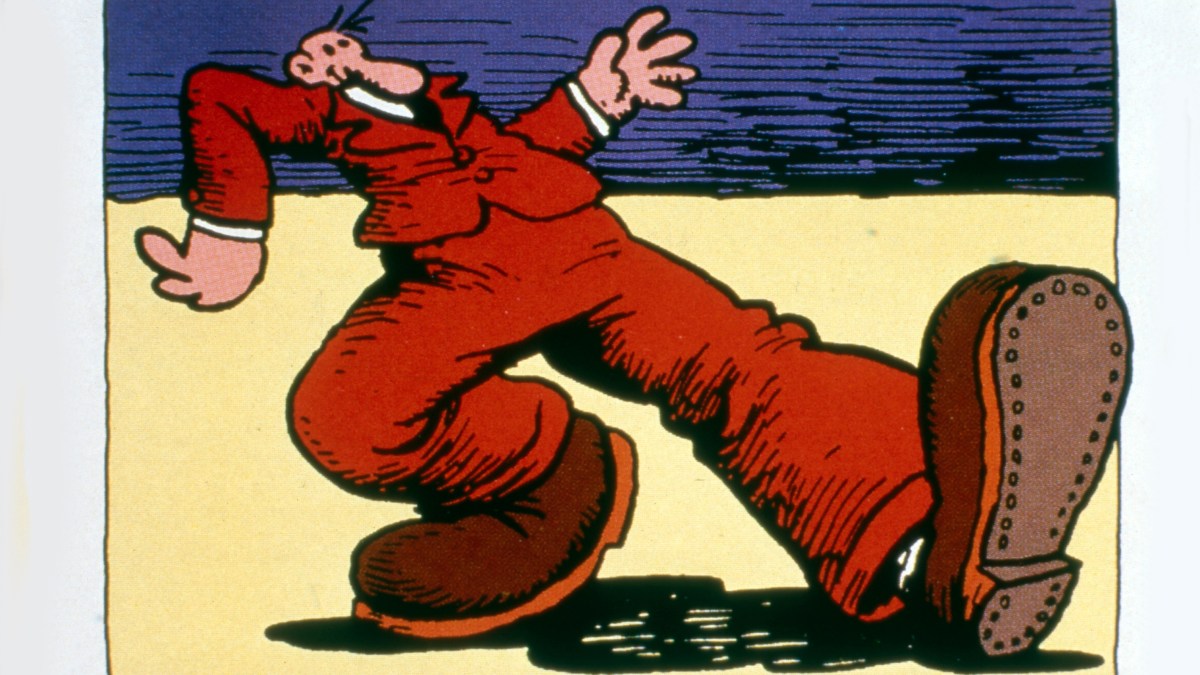
For ages, Crumb was synonymous with two things: that wild, psychedelic cover of the Big Brother and the Holding Company/Janis Joplin album “Cheap Thrills” and the unforgettable, stoned-out “Keep on Truckin’” figures that graced every hippie in America’s wall, alongside other questionable dorm-room decor. But hold your horses! While that’s what you thought of first, he was the mastermind behind the underground comic movement of the Sixties and Seventies and the creator of *Zap Comix*—basically the Michelangelo of doodles for the counterculture elite.
With an arsenal of LSD-infused characters like Mr. Natural, Fritz the Cat, and his deeply personal avatar, R Crumb—overly tall, sporting those charming milk-bottle glasses and swimming in a sea of anxieties—he crafted a pantheon that could make Freud blush. They are comically absurd, politically charged, and philosophically dubious, all brought to life with his signature hatching style. Honestly, it’s like his pencil had a mind of its own, and it was all about self-actualization through existential dread.
Cue the applause for Harvey Kurtzman, the anarchistic genius behind *Mad* magazine, and Carl Barks, the unsung hero of Donald Duck strips, who both had a whispering influence on Crumb. Spoiler alert: Crumb’s presence is literally a rite of passage for modern cartoonists. Without him, there would be no Art Spiegelman, Chris Ware, or any of those talented folks who brought depth to comic storytelling. According to Spiegelman, “Encountering Crumb is like the evolutionary leap in *2001: A Space Odyssey*; you just have to pass through him to discover your true voice.” What a way to boost a guy’s ego, right?
While Crumb may have rode the Sixties counterculture wave, don’t let that fool you—his tastes are as nostalgic as your grandparents’ record collection. A lifelong collector of ancient 78-rpm records and a cartoonist inspired by 19th-century aesthetics, his work feels like someone dredged up the past, added a sprinkle of self-criticism, and hoped for the best. However, it’s in his introspection that his magic lies; his brutal honesty often overshadows the socio-political context of his artwork.
Born amidst familial chaos in 1943 Philadelphia, Crumb grew up in a veritable soap opera of dysfunction. His home was a masterclass in familial angst complete with elements of addiction, violence, and a sprinkle of incest. Most tragically, his beloved older brother, who served as his first comic-drawing companion, fell victim to the family drama, dying by suicide in 1992. Crumb’s escape from that world could easily be mistaken for a miracle, though the neuroses he carried would become the raw fuel for his artistic engine.
And yet, it’s undeniable that Crumb embodies the essence of the current hashtag: #problematic. Yes, Angelfood McSpade is a caricature with more than a hint of discomforting stereotypes, while his early comics don’t shy away from treating sexual assault like a punchline. Furthermore, if you dig into his works, you’ll find gems like “Jail Bait of the Month.” Crumb himself would defend his dubious content by claiming he merely reflects societal ills, as if that’s a valid get-out-of-jail-free card for a game of Monopoly.
In truth, Crumb’s self-deprecating reporting of his own idiosyncrasies raises eyebrows. One comic panel even depicts him wilting under the fire of modern feminism, with him humorously announcing not to be trusted while internally screaming curses. For a guy whose erotic fantasies can only be described as “uniquely weird” (think strong legs and spontaneous piggyback rides), his behavior was often more tolerated than it should have been, making you wonder what era he truly belongs to.
In the end, while money may have become a significant theme in Crumb’s world post-hippie days, it was never his main motivator. The dude turned down $20,000 offers for Mr. Natural plush toys, akin to a kid saying “no” to candy. Even when he found himself broke thanks to taxes, he remained suspiciously monastic about cash, leaving us all to wonder if he was either very principled or very misguided—perhaps both. Regardless, that splendor of a quirky mind lives on through Crumb’s adventurous journey, now reflected in Nadel’s book, which is as full of fascinating trivia as much as it is about cartoons.
So there you have it. The life story of one of cartooning’s most controversial figures, illustrated in a volume that reveals the man, the artist, and the sheer absurdity of it all. Robert Crumb, humorously complex, and a tad outrageous, remains a fascinating lens through which to examine art and culture.
