

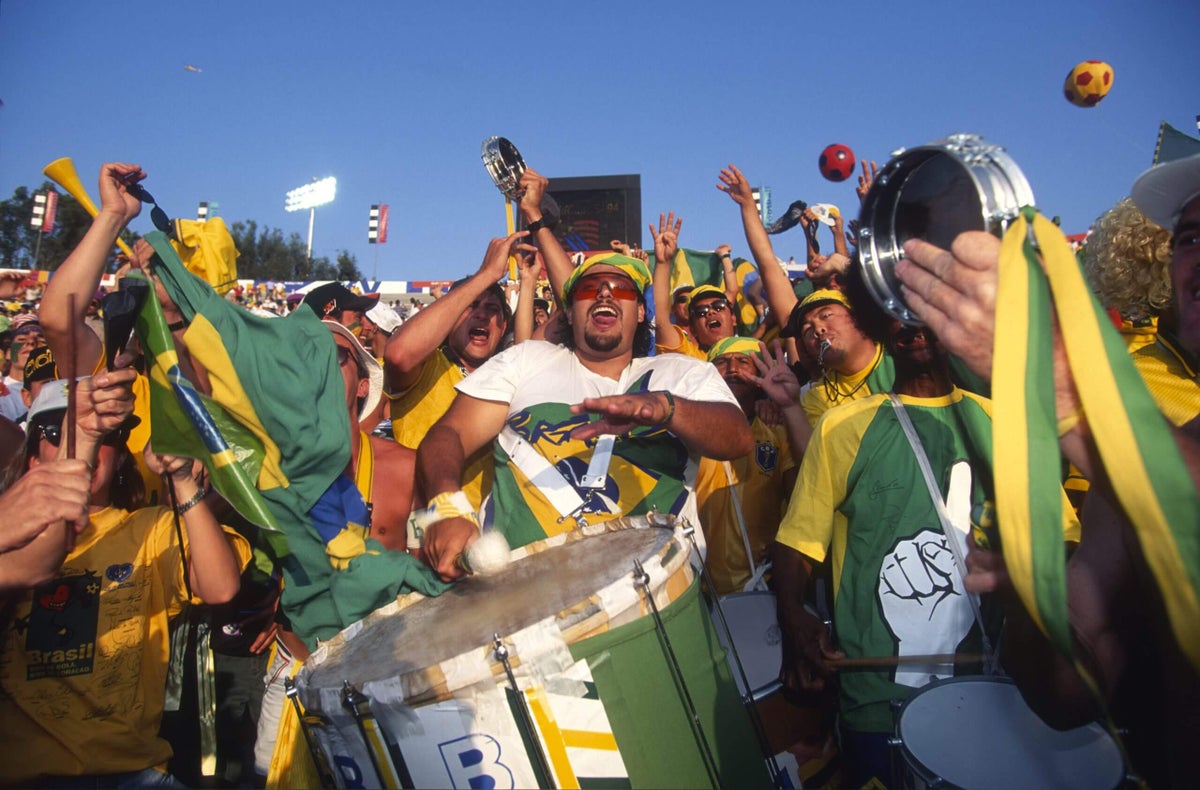
He set off without tickets, a plan, or much cash, but who needs those trifles when adventure calls?
Summer of 1998: a young soul I knew was on his way to the World Cup in France. Well, technically, he was popping into France while the tournament happened, with the wild notion that if he hung around long enough, he’d somehow stumble into a match. You know, like a clueless tourist waiting for his latte but accidentally catching a game instead.
Back then, it seemed entirely reasonable. The cheapest ticket to a first-round match at France ’98? A mere £19 (around $25 today)—a sum so small it barely registered as a transaction. Add to that a modest fare for the ferry, a few trains, a budget hotel or a tent, and a steady diet of yesterday’s baguettes, and voilà—a thrilling escapade unfolded!
“He’ll simply snag a ticket from some chap at a bar at 3 a.m.” The world is his oyster, replete with tales of romance with French girls or maybe working on a sun-drenched vineyard. Worst-case scenario? A hilarious story for the memoirs. Sounded totally reasonable! I mean, I was older and cooler than him—hopefully, right?
Fast forward to today, and the idea of galivanting off to the World Cup for a lark has become about as plausible as finding a unicorn at a truck stop. FIFA’s recent ticket pricing for the upcoming World Cup in the U.S., Canada, and Mexico is practically a conspiracy to keep the young, wild, and reckless at home. The ‘affordable’ tickets now hover around $200 for a group match. As you move up the stages, prices skyrocket into the realms of financial lunacy: $294, $680, and if you’re feeling particularly lavish, $4,185 for a seat at the final in New Jersey.
Let’s not overlook the explosion of hotel prices and plane tickets; it’s like an economic summit on steroids. Even North Americans are feeling the pinch, forced into significant sacrifices just to witness their sporting love affair in person. Will it be the couch or a trip to the World Cup? Ah, the heartbreaking choices of modern life!
But it’s not the first time we’ve grumbled about the soaring costs of football; it’s a tradition as old as time. The twist? These international tournaments are losing their magic. They’re becoming less a gathering of diverse, mildly reckless humans and more an invitation to join a fancy team dinner but only if your wallet is bursting at the seams. After all, who needs those spontaneous, chaotic communities of fans—the ones who slept under train station benches or traded stories over stale sandwiches—when all we can plan is a fancy get-together via credit cards?
