

SmokinStrange91/Reddit / Lucy_Sterling/Reddit
Grocery shopping used to be a simple task, but now it feels like an uphill battle that often requires mental calculations in the aisles and the constant questioning of our everyday choices. This transformation seems to have started around the late 1990s.
Recently, Texas resident Zoe Dippel unearthed an H-E-B grocery receipt from June 20, 1997, featuring a whopping 122 items. She shared this discovery on TikTok, highlighting just how inexpensive groceries once were.
“I wish,” Dippel captioned her video, prompting an emotional response that quickly garnered millions of views and nearly 3,000 comments from fellow TikTokers lamenting the dramatic rise in food prices.
The 1997 receipt, lengthy and filled with essentials like fruits, diapers, and baby food, totaled merely $155. In stark contrast, one TikTok user lamented, “Just bought 28 items for $127.03,” questioning how veggies could have cost “cents?”
Dippel meticulously compared the 1997 prices to those of 2026, revealing shocking price hikes. For instance, a bag of coffee that once cost $2.47 now runs $9.43. Diapers jumped from $12.99 to $31.47, while Little Debbie’s brownies surged from $1.09 to $5.75. After conducting similar calculations using H-E-B’s shopping app, Dippel’s total for today’s equivalent basket reached a staggering $500.
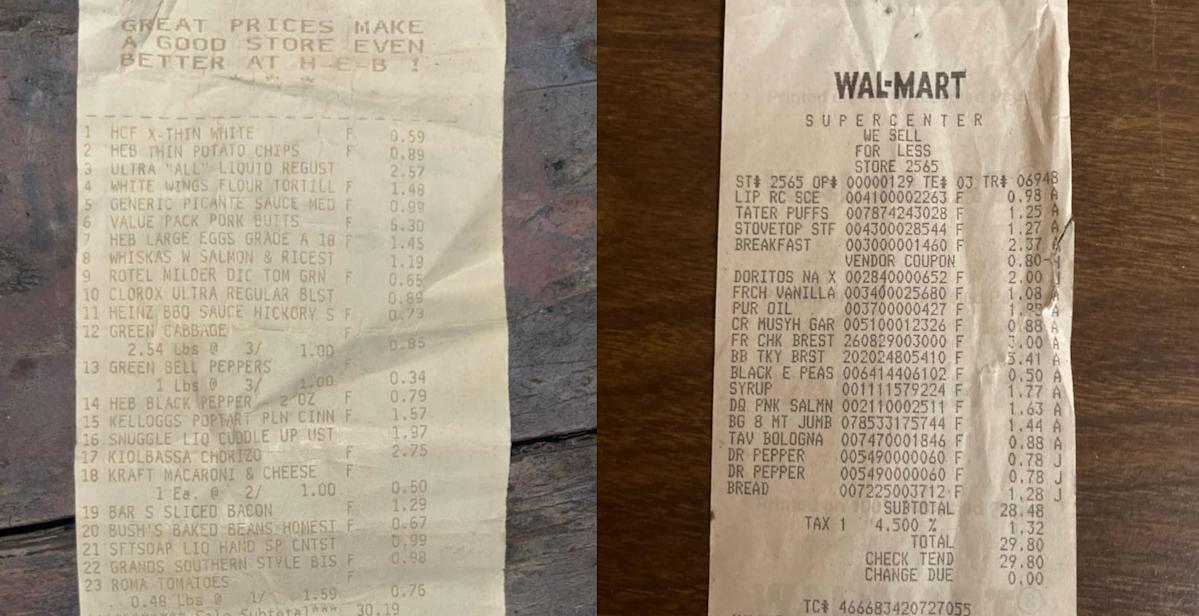
This revelation about inflated grocery prices isn’t just a single instance; Reddit has seen a surge of users sharing their own nostalgic receipts, like a 1998 H-E-B bill featuring 23 items that totaled just over $30. Today’s calculations for similar items showed costs exceeding $90, effectively tripling the original amount.
One Redditor commented, “We’re being robbed and just accepting it,” while another expressed despair with “Cries in 2025.” A separate post showcased a 1997 Walmart receipt, reflecting similar trends with basic items priced dramatically lower than today’s rates.
As we reflect on these memories of budget-friendly grocery shopping, the current landscape presents a stark contrast. Food prices continue to climb, albeit at a slower rate. According to the U.S. Bureau of Labor Statistics, overall food prices rose 2.9% year-over-year as of January 2026, with grocery prices increasing by 2.1%. Though these figures indicate a slight easing in inflation, they compound upon already elevated costs.
While we mourn the simplicity and affordability of 1990s grocery shopping, we are left hoping for a future where basic necessities, like ground beef, become affordable once more.
More From Cheapism

Craig Anthony Evans/©Google
