

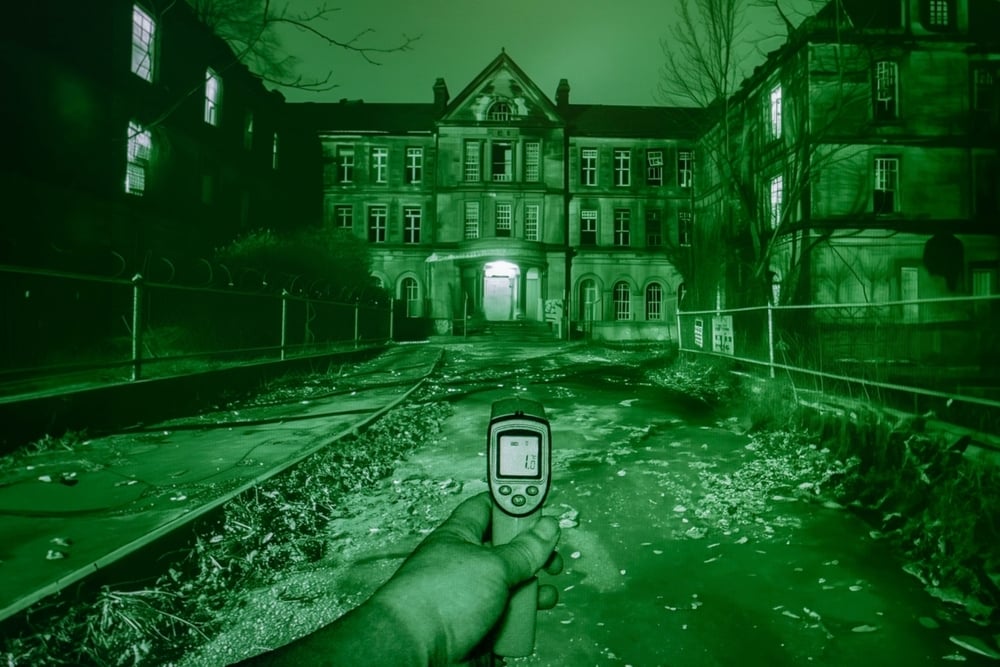
In a plot twist that could rival any ghost story, a Michigan man is contemplating trading his secure $60,000 salary for the glamorous life of a ghostbuster. Yes, you heard it right—chasing phantoms is now a viable career option. Who needs stability when you can have spectral encounters?
Meet Jake, who recently dialed into “The Ramsey Show,” perhaps seeking advice from financial gurus while simultaneously testing if ghosts have financial planners. Jake started a paranormal investigation business with his cousin (because family doesn’t just have your back; they have a vested interest in your ghostly endeavors) and a friend last August. Revenue, naturally, isn’t quite hauntingly high yet, hovering between $10,000 and $20,000 annually. The good news? They split it three ways. The bad news? Well, that still means you’d struggle to find a decent apartment in most zip codes.
Jake’s pondering two existential questions: First, is it even remotely possible for him to ghost-hunt full-time? And second, if it is, what on earth are the steps? Might I suggest consulting a Ouija board for those answers, Jake?
As for the business model? They charge clients anywhere from $50 to $160 to assess paranormal happenings—because nothing screams “expertise” like charging someone $50 to tell them whether their creaky floorboards have a genuine haunting or just the effects of age. Thanks to word-of-mouth referrals (and perhaps a ghostly nudge or two), they’ve even garnered the attention of local businesses, like that large barbecue restaurant serving up spirits of all kinds.
In an admirable display of teamwork, Jake manages customer outreach and scheduling, while his cousin juggles merch sales through an online platform. Meanwhile, their friend is buried under research on ghost-hunting gear because, of course, you need the latest gadgets to detect orbs—who wouldn’t want a state-of-the-art ghost radar?
Cue Rachel Cruze and George Kamel, co-hosts of The Ramsey Show, providing sage yet slightly sarcastic advice. “You want to get the boat close to the dock,” Kamel suggested, blissfully unaware that getting a ghost-hunting hustle as reliable as a traditional job is akin to trying to catch smoke with your hands. If they could pay themselves $180K a year to fully dive in, would they? “Absolutely!” Jake exclaimed, likely envisioning a life where he doesn’t just chase apparitions, but also checks accounts and balances.
Cruze chimed in with a reality check, hinting that partnerships with friends and relatives might lead to ghostly disputes more eerie than any phantasm. “You might want to draft legally binding agreements over who gets what if things go south,” she explained. Because what’s worse than not getting paid for a ghost chase? Losing your cousin to a spectral feud over consulting fees!
And then there’s the pricing model. “You guys need to up your prices, man,” Kamel said, perhaps hinting that the local ghosts might be willing to pay a premium for high-quality haunting services. After all, ghosts are notorious for their discerning tastes. The co-hosts suggested treating the business like a growing hobby while building an online presence—think less “Ghostbusters” and more “YouTube stars chasing supernatural fame.”
So, here’s the takeaway for our aspiring ghost-hunter: While he navigates this spectral career path, it seems one needn’t rely solely on haunted houses to generate wealth. Platforms like Arrived allow you to invest in rental properties with just a C-note, offering the potential for income without dealing with apparitions. They even paid out over a million in dividends last quarter! Because who needs real estate when you can dance with the undead?
In conclusion, Jake’s adventure into the realm of paranormal investigation is just beginning. If the demand for ghost-hunting escalates and prices take a hike, he might just close the door on his 9-to-5—which, let’s be honest, is a lot spookier than any ghost tale out there. Now, if only we could summon an investment banker from beyond the grave to give us some solid financial advice!
