


Published
13/01/2026 às 22:06
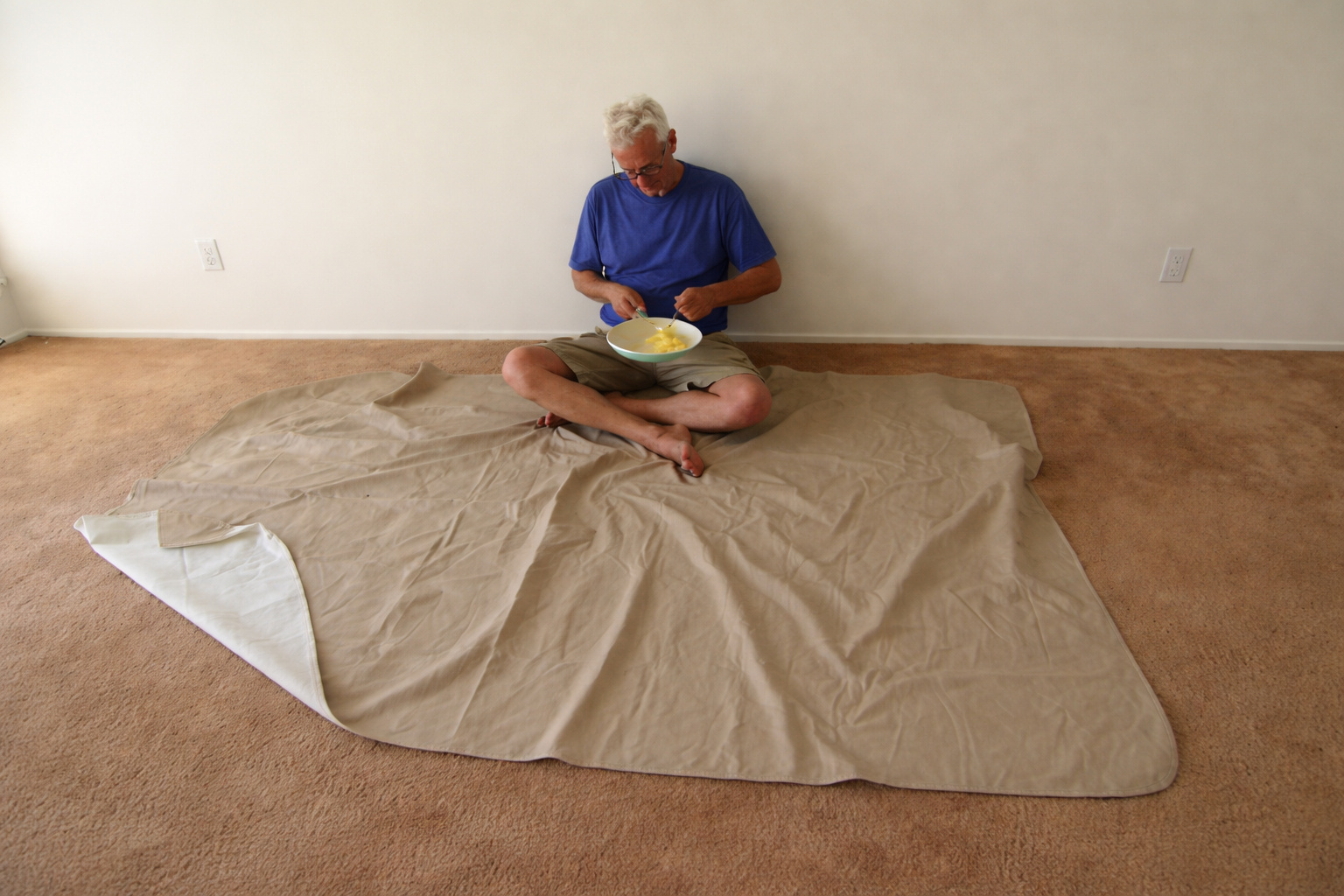
Ron Maestri leads a life defined by minimalism, devoid of material comforts. Living without a refrigerator, furniture, or appliances, he adheres to the principle that any expense not related to food is a waste. Over the years, he has adopted a lifestyle focused on essentialism, sleeping on the bare floor and utilizing only the necessities. His case serves as an extreme representation of everyday economics showcased on television. He purchased his home years prior to filming, but it has never been furnished. For Maestri, residing and resting on the floor feels comfortable and practical, dismissing sofas, beds, and tables as mere financial burdens.
Living Without Furniture: A Makeshift Bed and Minimal Wardrobe
Inside Maestri’s home, the absence of objects is striking. His bed is a clever creation made from wooden planks, styrofoam flakes, bubble wrap, and a tablecloth—an arrangement that he claims serves its purpose perfectly. While an average bedroom setup can cost thousands, his makeshift bed cost him almost nothing. This minimalist approach extends to his wardrobe, consisting only of a few shirts and shorts. Maestri forgoes underwear and socks, reducing regular clothing expenditures and laundry needs. His home has no fully furnished cabinets or decor, emphasizing a lifestyle that minimizes possessions to cut costs.
Food: The Absolute Priority and Creative Savings
In stark contrast to his spending on material objects, food takes center stage in Maestri’s life. Even in this area, he practices frugality. Without a refrigerator, he relies on neighbors for ice—an informal exchange that exemplifies community resourcefulness. Before adopting this lifestyle, Maestri worked in kitchenware, where he often received sample products. These opportunities allowed him to acquire essential cooking utensils at no cost. Now, he hosts cooking demonstrations, showcasing how to eat well while spending very little, emphasizing the importance of planning and creativity.
Public Baths: Urban Reuse and Daily Savings
Maestri’s commitment to savings extends to personal hygiene; instead of showering at home, he bathes at the beach, turning the experience into a dual-purpose activity by doing his laundry simultaneously. This practice saves money on water and electricity. He also scavenges for discarded items, like wine bottles tossed by beachgoers. Rather than spending $10 for a glass at bars, he enjoys the leftovers. Additionally, he collects edible herbs that grow in urban spaces, which reduces monthly expenses on fresh food.
Discarded Food: Lobsters in the Trash and Rejection of Waste
Maestri’s frugality reaches extreme lengths as he not only saves but also reclaims discarded food. In one notable instance, he forages through trash cans for lobster shells—items thrown away despite their significant market value. After cooking the shells, he retrieves the meat for his meals, highlighting the wastefulness pervasive in modern society. His lifestyle, grounded in stringent economic principles, challenges the conventional standards of comfort and consumption.
Ultimately, the question arises: How much of this lifestyle is a conscious choice, and how does living with almost nothing reshape our understanding of existence within contemporary society? Maestri’s journey is a reflection of resilience and resourcefulness, compelling us to reconsider our own consumption habits.
