

Angels, Budgets, and a Side of Spirituality
“Wait, you’re telling me I have a budget guardian angel?!” This is exactly the reaction you’d expect from someone who’s just realized that divine intervention comes with a price.
It was a day dedicated to religion at the Toronto International Film Festival, where the spirit of the divine was practically hovering over the crowd. Amidst the buzz of the festival, attendees were treated to “The Testament of Ann Lee,” the latest Amanda Seyfried spectacle that had Venice throwing holy water at its early screenings. Meanwhile, Rian Johnson’s much-anticipated “Wake Up Dead Man” promised to dish out mysteries steeped in piety. Because who doesn’t love a good whodunit seasoned with a sprinkle of sanctity?
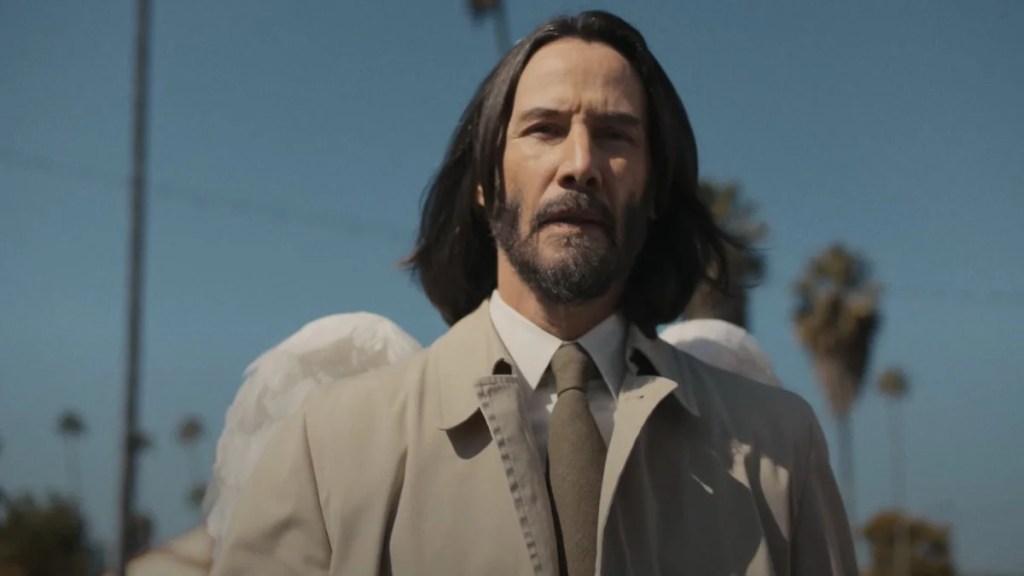
First-time director Aziz Ansari decided to give the audience his take on spirituality with “Good Fortune.” It premiered at the Roy Thomson Theatre, where Ansari plays an unfortunate soul named Arj. His luck is so bad that he needs a guardian angel, and in swoops Gabriel, played by none other than Keanu Reeves—proving again that if you can’t find the budget to hire an actual celestial being, just get an iconic actor.
Arj, the embodiment of a gig economy cliché, spends his days juggling ridiculous jobs—like waiting in line for other people and delivering food as if it were a spiritual calling. His nights are spent wrestling with the gods of poverty as he sleeps in a car that’s more rust than vehicle. And just when you think it can’t get worse, the car gets towed while he’s at a Denny’s, of all places. But don’t worry! Gabriel is up there watching, probably contemplating how many heavenly stripes it takes to stop a tow truck.
Gabriel, who by all accounts is a mediocre angel specializing in preventing distracted driving, wants a career upgrade. Cue the grand plan: switch lives with Jeff, a hedge fund manager played by Seth Rogen, just to see if Arj realizes he’s been hanking his way through life without a care. This masterful switching of roles is met with utter horror by Gabriel’s celestial supervisor, played by Sandra Oh. Spoiler alert: this results in Gabriel being grounded, tossed into the human experience, and left grimacing at burgers and cigarettes like a newlywed experiencing their first family barbecue.
“Good Fortune” isn’t exactly breaking any new ground with its body swap narrative; we’ve all watched these tropes enough to know that “Freaky Friday” might as well be the Bible for body swaps. But let’s give credit where it’s due: Ansari’s quippy writing combined with Reeves’s deadpan delivery almost makes you forget that originality is in a different zip code entirely.
Amidst all the chaos, “Good Fortune” taps into the age-old notion of corporate greed masquerading as philanthropy. The film hints at a society where wealthy elites celebrate their ‘success’ while being blissfully unaware of the reality beneath them. Of course, Keke Palmer is there to remind us about the joys of the working class, even if her union-protecting narrative feels a bit undercooked—like a dish that would give you food poisoning if it weren’t served at a Denny’s.
With “Good Fortune,” you’ll embark on a spiritual journey of choice, humility, and the realization that sometimes you just have to trade your pride for a better perspective—while chuckling at Gabriel’s tragicomic fall from grace. Despite a few comedic B-plots that flop harder than a used coupon, the film’s laughter has enough sparkle to justify its 90-minute runtime.
So, if you’re in the mood for a film that offers both laughs and a side of budget wisdom—because let’s be honest, we all need that guardian angel for our finances—look out for “Good Fortune” when it hits theaters on October 17. Just watch where you park your car.
The post ‘Good Fortune’ Review: Keanu Reeves Faces Heavenly Challenges in Aziz Ansari’s Budget-Conscious Comedy appeared first on TheWrap.
