

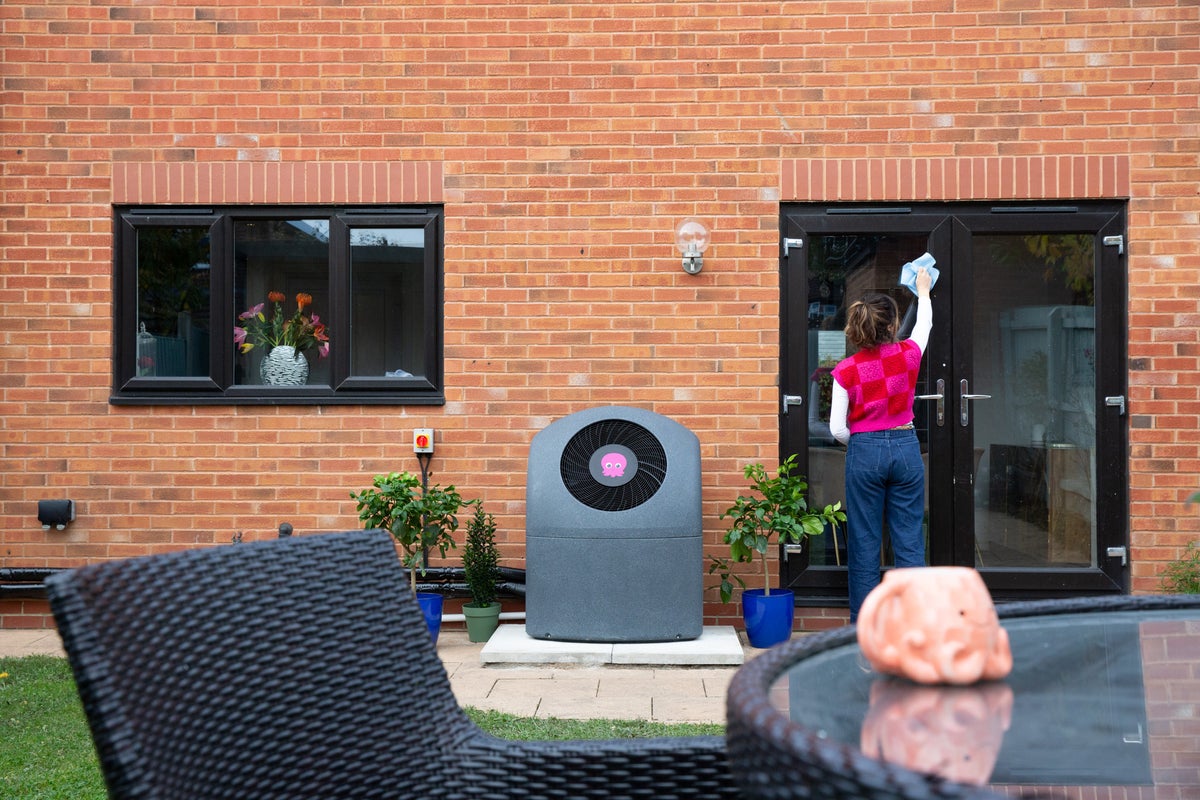
Octopus Energy’s new dashboard publishes fleet-wide data from thousands of homes across Great Britain (Octopus Energy)
Octopus Energy has launched a groundbreaking tool with its Cosy Heat Pump Fleet Performance dashboard, providing live data from thousands of homes across Great Britain. This initiative aims to address one of the major debates within the heat pump industry by showcasing real-world performance statistics.
According to data released by Octopus, around 80% of their heat pump customers spent less on heating during the past year compared to traditional gas boiler usage. For those utilizing the Cosy Octopus tariff, the average annual savings hit £219.
The dashboard captures actual energy consumption data from Cosy heat pump users spanning March 19, 2025 to March 18, 2026. This data allows for a direct comparison of operational costs between heat pumps and gas boilers, assuming the latter operates at an efficiency of 85%.
As of the latest updates, the dashboard indicates a 30-day average coefficient of performance (COP) of 4.15, a 90-day average of 3.87, and an annual seasonal performance factor (SPF) of 3.68. In simpler terms, this means that over the past month, the heat pump fleet generated over four units of heat for each unit of electricity consumed.
The efficiency of heat pumps is paramount, as their economic viability relies not only on electricity and gas prices but also on how effectively they convert electricity into heat. Octopus Energy emphasizes that, when properly utilized, especially with smart tariffs offering lower off-peak rates, heat pumps can be more economical than conventional gas systems.
The dashboard provides a detailed breakdown of heat pump performance by season and external temperatures. Notably, even in colder conditions, the system maintains a median COP range of 2.72 to 3.10. In more temperate conditions, this performance improves significantly, reaching COP values between 4.22 and 4.36 at temperatures ranging from 12°C to 15.5°C.
For Octopus, this dashboard is not just a data-sharing tool; it’s a strategy to shift the heat pump conversation from theoretical arguments to palpable, monitored outcomes. Greg Jackson, founder and CEO of Octopus, claims that this data serves as enduring evidence that heat pumps can indeed be more cost-effective compared to gas boilers.
However, it’s crucial to recognize the conditions under which the £219 annual savings figure was determined. It reflects costs for residents on the Cosy Octopus tariff and compares them to those on Octopus’s Flexible standard variable tariff for gas. Additionally, the savings from gas standing charges were factored in solely for customers who completely abandoned their gas supply. Octopus also underscores that actual savings may differ based on individual household energy use, insulation levels, and system design.
The Cosy Heat Pump Fleet Performance dashboard may not provide definitive answers regarding installation costs, necessary radiator upgrades, or the time frame for cost recovery when switching from gas. Nevertheless, it enriches the ongoing discussion by offering concrete data in a sector often characterized by speculation.
