

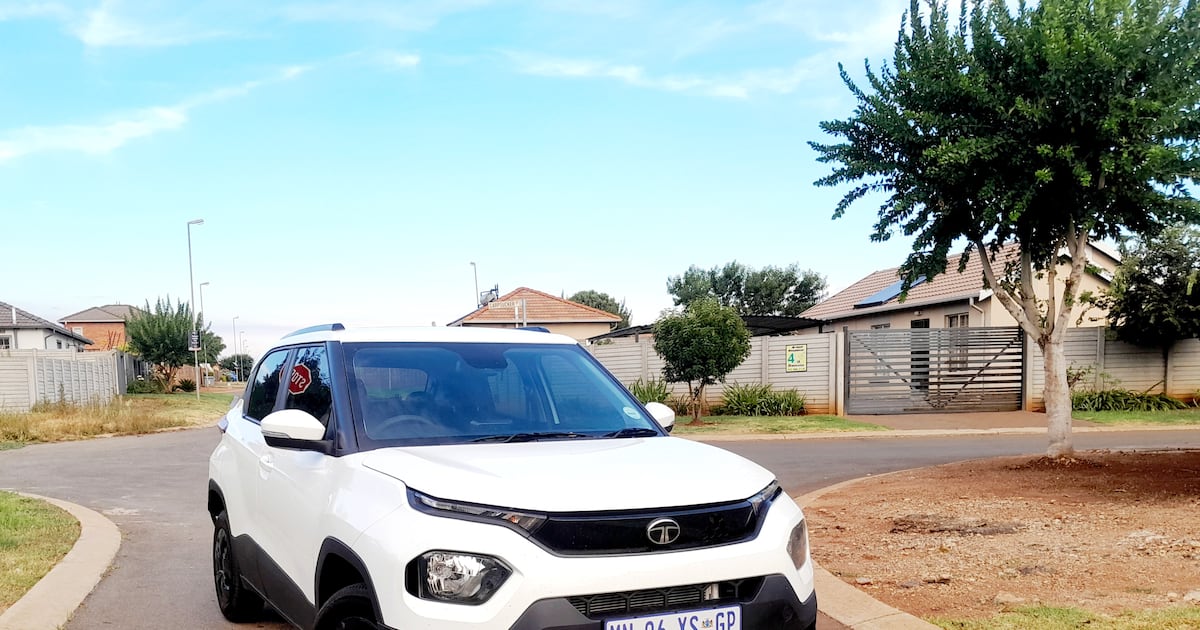
In 2025, the Indian automobile brand Tata made a notable return to South Africa, reintroducing itself with three exciting models: the Tata Tiago, Harrier, and Punch. Among these, the Tata Punch stands out as the brand’s answer to popular entry-level crossovers like the Renault Kiger and Nissan Magnite. This article explores whether the Punch can impress consumers seeking a dependable everyday vehicle.
Residing in a suburb of Johannesburg, I navigated through narrow streets dominated by larger vehicles such as trucks and crossovers. Amidst this, the Tata Punch caught my eye. Compact yet charming, this vehicle measures 3,827mm in length and 1,742mm in width, effortlessly maneuvering into tight corners and parking spots, making it ideal for urban living.
Tata offers five variants of the Punch, and the model I tested is the Adventure + S manual version. Unlike the other versions equipped with automated gearboxes, this particular variant exclusively features a five-speed manual transmission, providing a more engaging driving experience.
One of the standout features of the Tata Punch is its well-thought-out interior design. Despite its compact size, it comfortably accommodates four passengers, with a squeeze for five. While taller rear passengers might feel cramped, the layout is kid-friendly, making it practical for families. However, with a boot capacity of 366 liters, efficient packing is essential when traveling with full occupancy.
Quality materials and modern design characterize the interior. The Tata Punch features a digital driver’s display, a floating touchscreen, air conditioning, electric windows, and mirrors. Essential tech such as smartphone integration, a USB port, steering wheel volume controls, and a reversing camera further elevate the user experience. Auto on/off lights and a sunroof cater to contemporary expectations as well.
Safety is prioritized with systems like ABS, stability control, and dual airbags. An intelligent AI assistant even reminds you to buckle up, adding another layer of assurance for drivers.
Despite its strengths, one minor drawback is the limited storage options inside; for example, the driver’s side door pocket does not adequately fit a standard water bottle.
Powering the Tata Punch is a naturally aspirated 1.2-liter three-cylinder engine, generating 65kW and 115Nm. Available in Normal and Eco driving modes, it offers a commendable performance that couples well with the five-speed manual transmission. In contrast to some competitors in the segment, the Punch provides a solid driving experience without leaving the driver craving more power.
The Punch handles highway driving and steep inclines with ease. It features a light clutch and smooth manual shifts, making city driving and stop-and-go traffic manageable. However, a lighter steering response would enhance maneuverability.
Economically, the Tata Punch shines with an average fuel consumption of 6.3 liters per 100km, primarily at low speeds and in urban conditions. With a 35-liter fuel tank, refueling should cost around R700, and when in Eco mode, it promises a range of over 600 kilometers, a significant advantage for budget-conscious buyers.
Overall, the Tata Punch delivers a commendable mechanical performance complemented by a 187mm ground clearance, allowing it to navigate gravel roads effectively. The ride quality is impressive across various surfaces, and it maintains a low noise level even during cornering.

In conclusion, the Tata Punch, priced at a competitive R269,000, earns praise for its value proposition within the budget crossover segment. While it faces stiff competition, including rivals like the Nissan Magnite and the more powerful Mahindra XUV 3X0, it offers a compelling blend of features and practicality. This Tata model is a noteworthy option for those exploring the subcompact crossover segment.
For comparison, here’s how the Tata Punch stacks up against some rivals:
- Tata Punch Adventure + S, 65kW/115Nm — R269,000
- Renault Kiger 1.0 Techno Manual, 53kW/96Nm — R249,999
- Nissan Magnite 1.0 Visia Manual, 53kW/96Nm — R252,200
- Citroen C3 1.2 Max, 60kW/115Nm — R264,500
- Mahindra XUV 3X0 1.2T MX2 manual, 82kW/200Nm — R259,999
- Hyundai Exter 1.2 Premium manual, 61kW/114Nm — R269,900
- Suzuki Ignis 1.2 GLX manual, 61kW/113Nm — R276,900
