

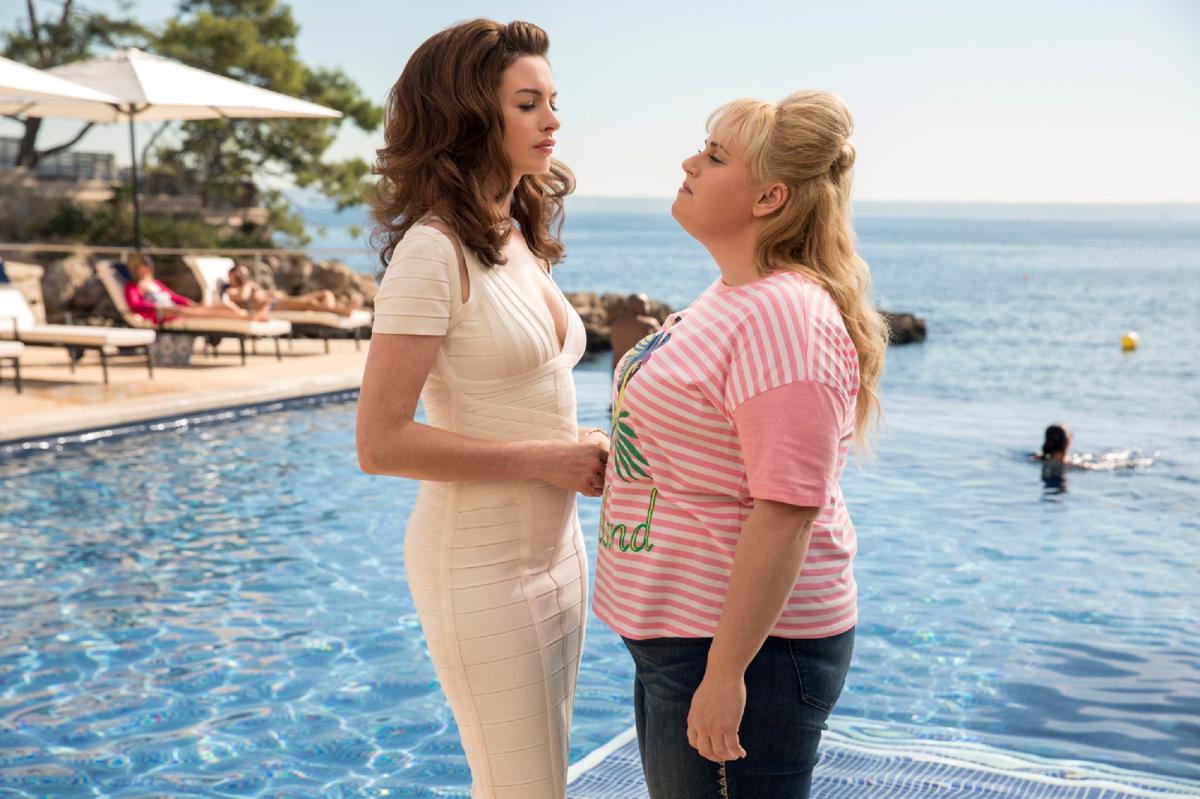
Dirty Rotten Scoundrels Meet Their Match: The Gender-Swapped Hustle
Ah, the eternal struggle of Hollywood: when the well runs dry of fresh ideas, simply swap the genders and hope no one notices. Enter “The Hustle,” a reimagining of the 1988 classic “Dirty Rotten Scoundrels,” which was itself a remake of the 1964 gem “Bedtime Story” starring Marlon Brando—because why bother coming up with original content when you can just add a sprinkle of glitter and call it new?
In this comedic caper, the dapper duo of Michael Caine and Steve Martin are unceremoniously replaced by the enchanting Anne Hathaway and the uproarious Rebel Wilson. But fear not, dear cinephiles; Caine and Martin can lounge worry-free on their luxurious Riviera, knowing that “The Hustle” flounders like a fish out of water—its con job schemes falling flat, and the laughs, well, scarce.
The crux of the comedy is led by Hathaway, who channels her inner Josephine Chesterfield, a high-class con artist prowling the casino floors of Beaumont-sur-Mer. Her shtick involves charming older men into parting with their fortunes—quite the impressive feat, until you realize her British accent resembles a poorly tuned radio. If she can’t convince us, how on earth will she reel in a line of European millionaires? Perhaps they were simply entranced by the glitz of a casino and not her barely-there delivery of “Cheers, mate!”
But wait! Enter the formidable Penny Rust, played by Wilson, who meets Josephine on a train while performing her signature routine: persuading men to rescue her non-existent hotter sister. For added effect, Wilson dabbles in Martin’s classic gag of ordering a feast on her unsuspecting victim’s tab. A masterclass in deception, or merely the art of depleting someone else’s wallet?
Unlike its male predecessors—whom I suspect may have mastered the script by osmosis—“The Hustle” is a prisoner to its origins, offering a carbon copy of the plot, with obligatory updates such as smartphones, laptops, and an array of streaming apps as if this alone could distract from the limp storyline. The actresses bring their own flair, which could potentially pass for charm if you squint hard enough and ignore Wilson’s delightful brand of klutziness.
Wilson, in a valiant attempt to save the show, delivers her usual blend of Aussie weirdness and shameless pratfalls. A highlight is her creation of Hortense the Foul Princess—a diversion and character Geppetto would have been proud to call his daughter. Here’s an idea: why not just throw diamonds at guys and call it a day? Frankly, it would save time and effort.
Caught in the crosshairs of these charmingly unscrupulous women is the unsuspecting Thomas, a tech whizz turned mark, who doesn’t seem to realize he’s about to be swindled out of $500,000. While the comedy duo hones in on their prey, the real tragedy is that this British lad is more genuine than the entire film put together. Bless his heart.
Without the charm of Caine and Martin, “The Hustle” struggles to find its footing. If laughter is the best medicine, this film delivers the equivalent of a placebo, leaving audiences with a desire for something—but I can’t put my finger on it. Something original, perhaps?
As we await the next whimsical reimagining of a classic film, let’s raise a toast to the real treasures of the cinematic universe: originality and creators unafraid to take risks, rather than simply relying on recycled plots and dubious accents.
