

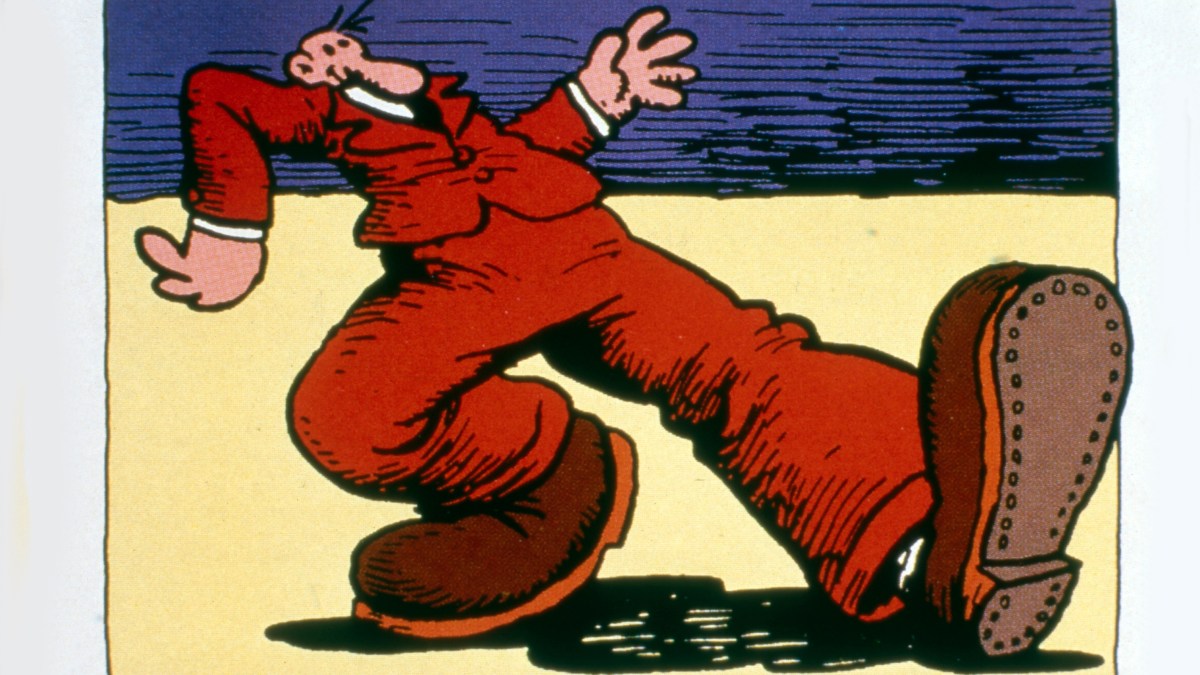
Meet Robert Crumb—known affectionately (or perhaps not) as “R Crumb.” He’s a heavyweight in the cartooning world, a quirky figure who defines the term “eccentric.” Dan Nadel’s meticulously detailed biography might just give you the full picture, should you dare to step into Crumb’s wonderfully warped mind.
For quite some time, Crumb was the go-to guy for the mainstream audience, thanks to his iconic illustration for the Cheap Thrills album cover by Big Brother and the Holding Company. You know the one—the psychedelic art that adorned everything from dorm-room walls to mudflaps on 18-wheelers. Yet, that’s just the tip of the iceberg. In the Sixties and Seventies, he was the Sid Vicious of underground comics, the creative force behind Zap Comix, and a pioneer in the field.
Crumb’s artistic legacy features a bizarre cast of characters—each one more outlandish than the last, often dripping with absurdity and some questionable ethics. We have Mr. Natural, the Snoid, Angelfood McSpade, and of course Fritz the Cat, in addition to his most complex creation, R Crumb himself—a lanky character with milk-bottle glasses and a full-on arsenal of neuroses. His instantly recognizable hatching style adds to their uniqueness, just in case the themes of self-loathing and existential dread weren’t enough to capture your attention.
Crumb may have seemed the poster child for the Sixties counterculture, but let’s be real—he’s more of a vintage curio with a penchant for the past, especially when it comes to scouring thrift shops for old 78 RPM records. His artistic gaze often reflects back to the 19th and early 20th centuries. Sure, he dislikes corporate America on principle, but it’s all secondary to the intense self-examination he subjects himself to through his work.
Born in 1943 to a family steeped in drama, Crumb’s childhood was nothing short of a soap opera—complete with violence, addiction, and a glorious dose of family craziness. His older brother, the kid with whom Robert first created comics, later took his own life after battling mental health issues and substance abuse. So, really, that Crumb is here to tell the tale is nothing short of miraculous, right? And let’s not sugarcoat it: his neuroses were practically a golden ticket to a career in cartooning.
Now, let’s address the proverbial elephant in the room—Crumb is nothing if not #problematic. His character Angelfood McSpade, for instance, is essentially a hyper-eroticized racial caricature. Rape jokes? Oh sure, they’re sprinkled throughout his earlier works as if they were confetti at a particularly tasteless parade. The defense he and Nadel offer? Honestly transparent: he merely mirrors the culture, with all its flaws, rather than creates them. Classic case of “it’s not me, it’s society.”
In a self-indicting twist, Crumb bares all—his lusts, prejudices, and misanthropy—creating art that lays bare the uncomfortable truths of the society he reflects. There’s a panel in Nadel’s biography that captures this beautifully, with Crumb depicted in shame as a cacophony of feministic criticisms swirls around him. His thought bubble goes for the punchline: “@*!!! BITCHES.” Wow, Crumb, very enlightened of you.
The gentleman’s unique obsessions leave little to the imagination. For instance, he seems to have a particular fascination with women sporting strong legs—after all, who doesn’t enjoy some athleticism in their erotic fantasies? He preferred to be given piggyback rides—while not always waiting politely for an invitation. According to Nadel, “some men hug too long, and some go in for unwanted kisses.” Crumb? He leapfrogged over those social niceties in classic Crumb style. And remarkably, many women accepted this behavior without batting an eye—what a time to be alive!
Fast-forward a few decades, and Crumb’s work is being recognized with serious money, just as he exits the scene. Despite turning down a staggering $20,000 for cuddly Mr. Natural toys, the man’s ethos remained that of a monk—albeit one who doodles racially charged characters. It wasn’t about the cash but rather some inexplicable moral high ground. Nadel dives deep into this conundrum—yes, there’s plenty of nerdy minutiae on sales figures and print runs, but at its core, this biography is just as much about Crumb the man as it is about Crumb the artist.
Now in his twilight years and shacking up in rural France, Crumb seems to have opened up a tad to Nadel’s probing. “I’m not opposed to it,” he said with a shrug that took Nadel countless hours of travel to elicit. The same man who has laid bare the grotesqueness of his inner psyche is now offering up his life story—how poetic. Ah, life, what a quirky little adventure we all find ourselves in.
