
Robert Crumb, or “R Crumb” as he fancifully insists, is an undeniable titan of modern cartooning and an individual whose eccentricities could fill a gallery. Dan Nadel’s meticulously crafted biography reveals everything you’d ever want to know about him—and maybe more than you’d ever want to.
For the uninitiated, Crumb gained notoriety in the mainstream for his eye-popping album cover for Big Brother and the Holding Company’s *Cheap Thrills*, which featured Janis Joplin and those elongated, blissed-out figures. You may have seen them gracing a myriad of dorm-room posters or tenaciously stuck to mudflaps of 18-wheelers. But that’s merely the sugar-sweet icing on the bizarre cake. He was, after all, the epicenter of underground comics in the ‘60s and ‘70s and the genius behind *Zap Comix*.
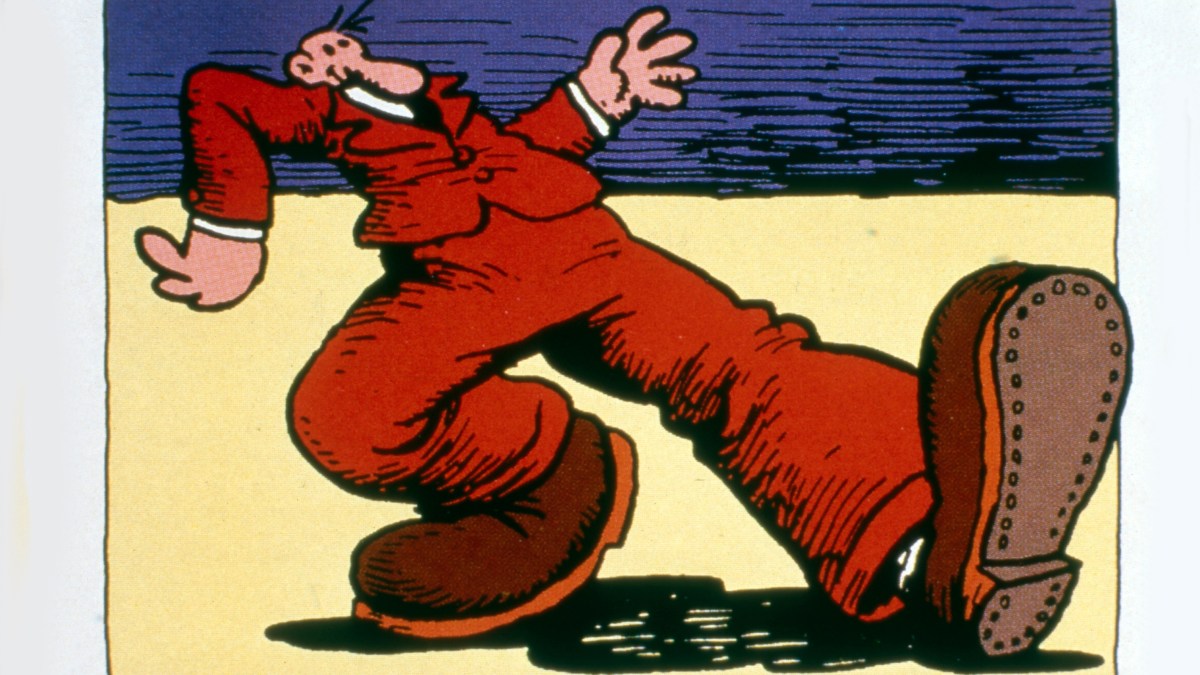
Crumb gifted us a kaleidoscope of absurdist and oddly philosophical characters—think lustful figures with the charm of a bad hangover—all brought to life through his strikingly recognizable hatching style. Characters like Mr. Natural, Angelfood McSpade, and Fritz the Cat traipse through Crumb’s universe, but none quite capture the turmoil of his own psyche like the lanky, bespectacled figure of R Crumb himself—brimming with neuroses that would make a therapist’s couch weep.
He took his cues from cartooning legends like Harvey Kurtzman of Mad magazine fame and the elusive Carl Barks, the man behind Donald Duck—whom young Crumb dubbed “the good duck artist.” And it turns out that everyone who made a mark in cartooning has had to trot through Crumb’s peculiar garden. No Crumb, no Art Spiegelman, no Chris Ware, no Daniel Clowes. Art Spiegelman himself eloquently states: “Every cartoonist has to pass through Crumb like human evolution has to pass through slime.”
While Crumb was a poster child for the Sixties counterculture, he often found himself looking backward rather than ahead. Possessing an insatiable obsession with collecting antiquated 78rpm records, he can be seen as a walking time capsule of 19th and early 20th-century influences. His critique of society has always seemed secondary to his merciless self-examination.
Born in 1943 into a Philadelphia family that could make for a riveting horror movie script, Crumb’s upbringing was marred by madness, addiction, and a family tree so knotted that it rivals the most twisted fairy tales. His beloved brother, a fellow comic artist, tragically took his life after years of struggling with mental health issues. Given the nature of his childhood, it’s astonishing Crumb managed to escape into the world at all—or it could be argued that he simply ran away to become a master of self-doubt.
Let’s talk about Crumb being #problematic. Angelfood McSpade, anyone? A hyper-eroticized caricature that sends the “Woke Police” racing for their pitchforks. Racial and sexual politics in Crumb’s oeuvre are murkier than a swamp, and let’s not even mention instances where rape was played for laughs. His defense? “I’m merely a mirror reflecting society’s grotesqueries!” Bravo, Crumb. Just what we needed—more reflections of the funhouse kind.
Candidly, Crumb’s self-reporting is a caricature of its own. He candidly dissects his lusts and prejudices while simultaneously holding up a mirror to the culture that shaped him. In one illustrated panel, Crumb sheepishly bows his head while a woman unleashes a stream of feminist critiques—words blurred like a bad text message. His thought bubble encapsulates the authenticity of a man wrestling with contemporary existence: “@*!!! BITCHES.”
Despite being nothing short of a comic book Casanova, Crumb’s first marriage fell apart faster than you can say “awkward.” A long-term partnership with Aline Kominsky followed, riddled with its own ups and downs, much like the rollercoaster ride of Crumb’s psyche. When the ’70s counterculture began retreating into the shadows, Crumb found new avenues, morphing his style with works like *American Splendor* that echoed his newfound realism.
Crumb’s reputation shifted from antihero to an almost reverent figure in later years, with his artwork commanding hefty sums just as he stepped back from the spotlight. But let’s be honest: Crumb could care less about a fat paycheck. Known to turn down substantial offers—like $10,000 for an album cover for a band he despised (the Rolling Stones, if you must ask)—he’s a paragon of “I’d rather be poor and principled than rich and sellout.” In a world of commerce, Crumb truly is a walking anachronism.
For anyone intrigued by this compelling character, Nadel’s biography shines a light—even when it flickers—as it exposes the entirety of a man who is as intriguing as he is baffling. Now residing in the rural landscapes of France, Crumb essentially gives zero formalities over how he’s portrayed in Nadel’s book, summarizing his approach with a shrug akin to a man who has seen it all, yet somehow still can’t believe he made it this far.
