
Ah, the delightful chaos that is Bridgerton. Season three has graced us not just with stunning visuals and romantic intrigues, but also with a smorgasbord of editing bloopers and enigmatic symbols hiding in the shadows—because who doesn’t love some cheeky Easter eggs alongside their scandals? However, if you thought the Regency era was rife with drama, wait until you hear about the latest howler: a continuity error that’s so absurd it’s practically begging for a standing ovation.
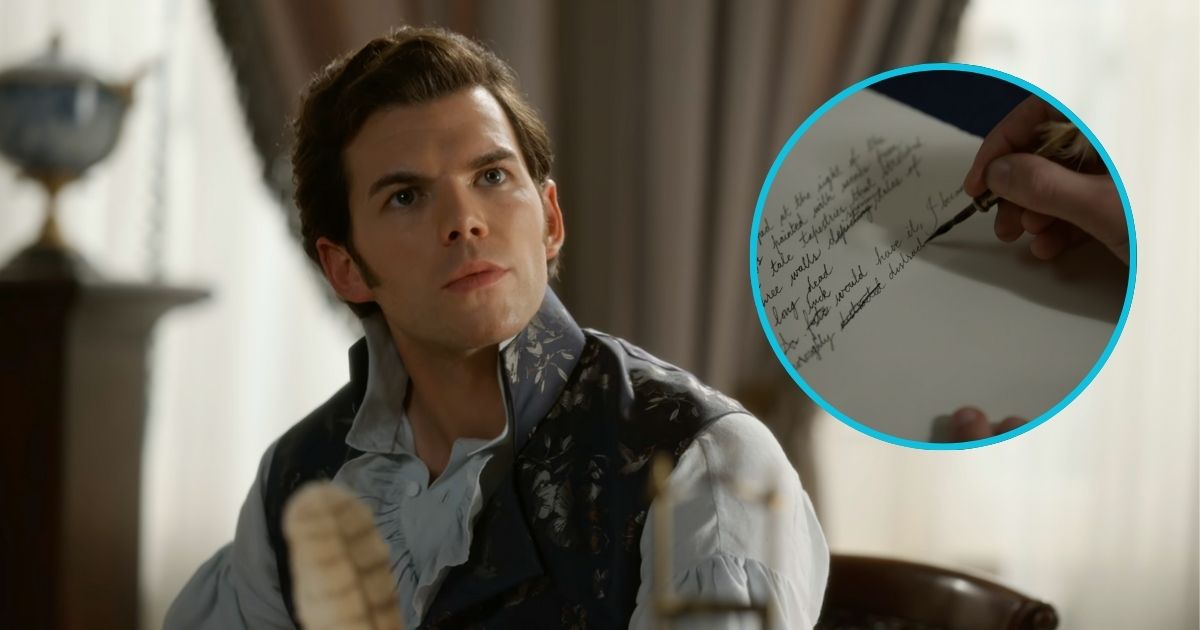
This particular snafu hops around throughout our beloved series, but it reaches a crescendo in part two, episode six. Picture this: Francesca announces her engagement, creating waves of joy—or mild disdain, depending on how invested you are in her narrative. Colin abruptly skulks off to his study, quill in hand, ready to etch the secrets of the universe—or, more likely, his feelings about chocolate macaroons. Eloise, the ever-persistent sister, saunters in to check on him.
Here’s where the fun begins! We see Colin diligently writing with his quill in his right hand—an impressive feat for someone trying to avoid the pitfalls of Regency-era gossip. Then, as the camera pivots to Eloise in an artsy, cinematic flourish, we’re lulled into thinking we’re watching a serious period drama. But upon returning to Colin, who is now clutching that quill in his left hand like a champion in a sport nobody knew existed—ambidextrous magic or just a laughably glaring mistake?
Is Colin a secret ambidextrous wonder? Or have we simply discovered the directors are playing an elaborate game of “hide the error”? Well, newsflash from the real world: Luke Newton, the actor who portrays Colin, is left-handed. Meanwhile, his character, Colin, is decidedly right-handed, a detail that, in the intricate ballet of narrative truth and screen time, seems to have slipped right through the cracks. In the good old Regency era, being left-handed was almost akin to witchcraft—so perhaps it’s a historical shout-out after all!
The internet surely hasn’t shied away from scrutinizing poor Colin’s dexterous dilemmas. First, we had his fingers in the carriage scene adjusting Eloise’s dress—which, let’s be honest, felt like a scene that was quite possibly cut from a different period drama altogether. And now, here we are, questioning the very fabric of reality as we know it because a quill hopped from one hand to another without so much as a transition scene. This is the Regency period, not a magician’s act!
But Colin’s hand isn’t the only thing entrancing viewers; it’s his ability to inadvertently fuel meme culture. As if he’s throwing us little nuggets to dissect over our afternoon tea, it’s as if the writers knew that fans would gather around this particular faux pas, elevating dinner conversations to new heights. “Did you see the part where Colin wrote with his left hand? How thrilling!” The dinner table toasts to fictional pratfalls, and suddenly, we’re right back to 2023 instead of the 1810s.
With all these hiccups, one begs the question, can we even trust these characters with our emotional investment? With myriad editing oopsies playing games with reality, it’s hard to take Colin seriously—or should we just assume he’s playing up to the left-handed tendencies of the modern actor as an artistic choice? Who doesn’t appreciate the irony of a seemingly royal writing with two left hands in a world that believes every incident is written in the stars?
So, as you re-binge Bridgerton this season, keep your eyes peeled for these blunders. Netflix has kindly offered us both scandal and slapstick, and don’t forget to reflect on the sheer audacity of flaunting Regency era norms—all while Colin tries to navigate who he really is. After all, what’s a bit of left versus right hand drama amidst the sparkling world of high society? Now, settle in for a viewing, and may your hand be steady as you reach for that popcorn!
