

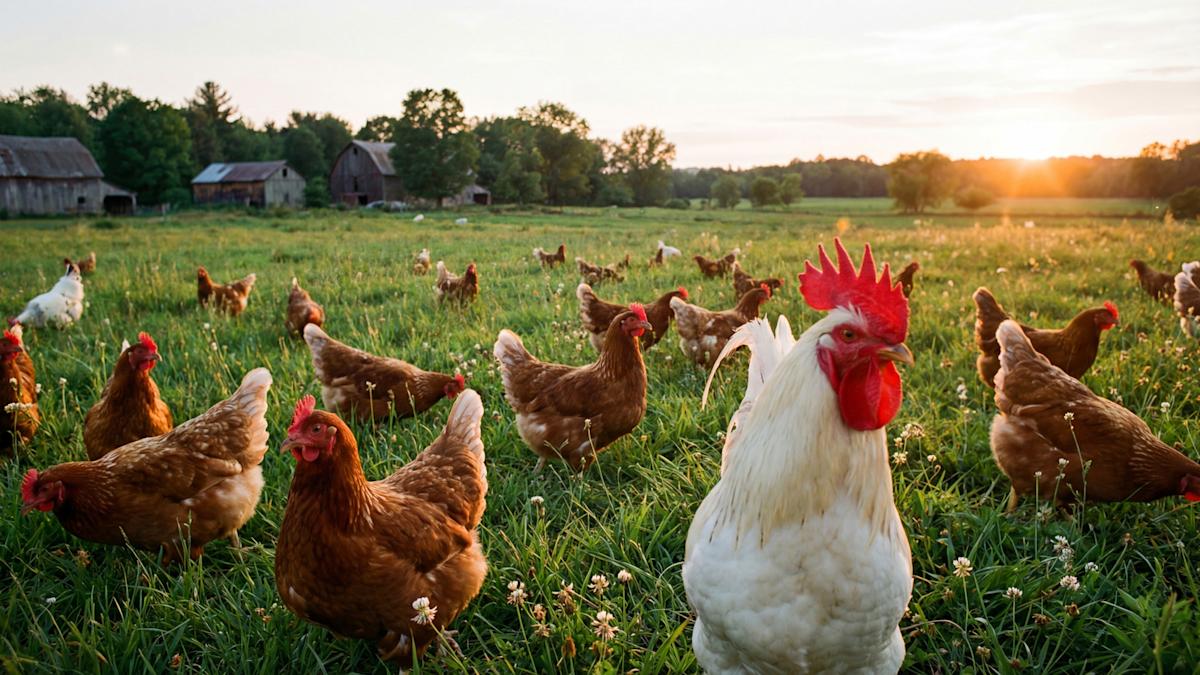
Free range chickens on a green field with farm buildings. – JLugonStudio/Shutterstock
In nature, the food chain is a well-established system: whales consume krill, cats prey on rodents, and humans make meals from fish and livestock. While this cycle is a fundamental aspect of the ecosystem, human practices have taken it to an extreme. The staggering volume of animals slaughtered daily for meat in the United States raises significant ethical questions. According to the Animal Clock website, over 19 million animals are killed in the U.S. every day, totaling more than 18.7 billion annually, with an alarming increase of approximately 10,000 every five seconds.
These figures include fish and shellfish, which significantly inflate the total count. Even when focusing solely on land animals, the figure stands at 9.76 billion annually just in the United States. One telling indication of overproduction is the amount of meat wasted. American consumers toss away about 21% of produced meat, translating to approximately 14 billion animals that died without purpose, highlighting a critical flaw in our food system.
The Life of Farm Animals: A Troubling Reality

Woman looking at meat in the supermarket meat aisle. – Fcafotodigital/Getty Images
Profit-driven companies and budget-conscious consumers often overlook the dire conditions in which farm animals live. Battery-caged hens are confined to spaces as small as 8 by 10 inches, bred to grow so large that movement becomes a challenge. Similarly, breeding pigs exist in gestation crates measuring a mere 2 by 6.6 feet, suffering from extreme limitations in their movement. Practices like tail docking in piglets, designed to control behavior linked to stress of confinement, further exemplify the cruelty inherent in factory farming. Dairy cows, forced into a cycle of perpetual lactation, are often slaughtered for beef at a mere 4 to 6 years old, despite their natural lifespan of up to 20 years.
The rising cost of food may lead consumers to believe they have no choice but to accept low-priced products. However, the hidden costs are paid by the animals subjected to inhumane treatment. Eating meat isn’t inherently wrong, but it prompts questions about our consumption levels. Society should reconsider how to financially support higher animal welfare standards through increased prices for humane meat options, making ethical eating accessible for everyone.
Paving the Path to Change: Small Steps Matter

Person looking at calorie-counting app with prepped meals in background. – Chay_Tee/Shutterstock
While the world may not transform overnight, every individual can contribute to positive change by making informed decisions regarding meat consumption and animal welfare. One effective method is choosing ethically sourced meat. Though it may require more effort to find and a modest increase in cost, it supports animal welfare and responsible farming practices.
Equally important is assessing your dietary habits regarding meat. Understanding the protein requirements per meal can help prevent over-purchasing and waste. For instance, if a pasta dish is on the menu, remember that the pasta and sauce offer substantial protein, allowing for smaller portions of meat without sacrificing nutritional value. This thoughtful approach not only promotes responsible meat consumption but can also alleviate financial strain, creating room for higher-welfare meat purchases.
For further insights on food and drink, consider subscribing to The Takeout’s newsletter. Gain access to taste tests, food news, exclusive deals, recipes, and cooking tips to refine your culinary experience.
For the full article, visit The Takeout.
